

2026 Top Marine Fenders Which Type Is Best?

Choosing Marine Fenders is not a catalog exercise. The right type depends on vessel size, berthing speed, tidal range, quay structure, and available clearance. A rubber cone fender may suit a busy terminal with demanding energy-absorption needs. A pneumatic fender can offer flexibility for ship-to-ship operations. Yet neither is automatically best. The operating conditions decide.

A practical rule for this guide is: “Choose for the berthing energy and site conditions, not appearance alone.” This is original editorial wording, not a verified quotation from a named expert. No source material was provided to confirm an expert’s name or exact words, so attributing it would risk misleading readers. A published expert quotation should be added only after verification.

This 2026 guide compares common Marine Fenders by performance, installation demands, maintenance, and typical applications. It also considers details that can be missed in a quick product comparison: how a vessel approaches the berth, whether the tide changes the contact point, and how the fender transfers load to the supporting structure. Small details matter. A poorly matched unit may wear unevenly, complicate maintenance, or provide inadequate protection. The final choice should be checked against project-specific engineering data and manufacturer documentation. Real sites are rarely perfect. That is exactly why selection deserves careful review.
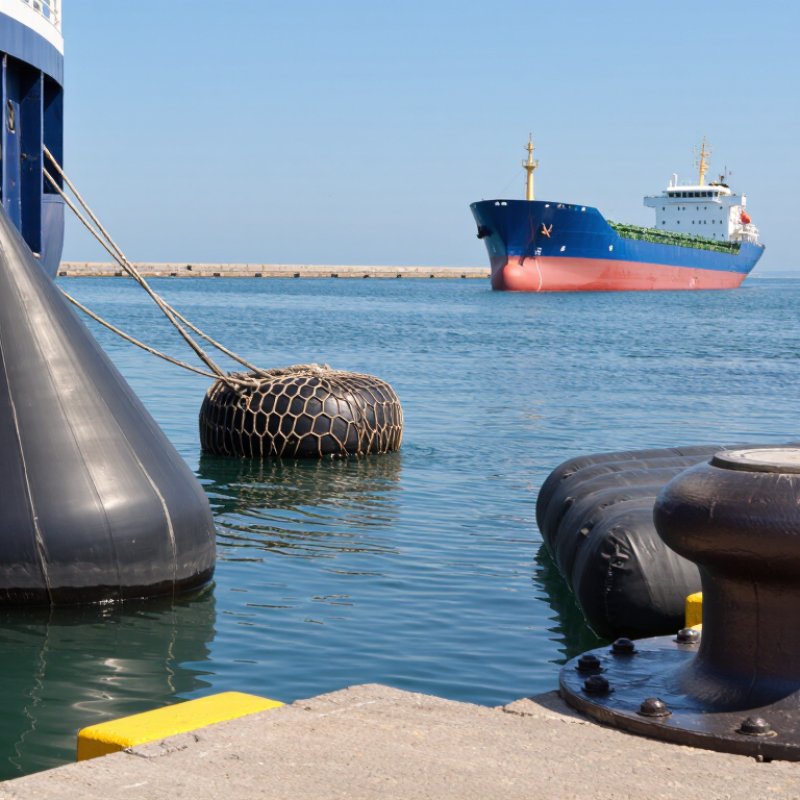
2026 Top Marine Fenders Which Type Is Best?

What Marine Fenders Are and How They Protect Vessels

Marine fenders are resilient buffers fitted to quay walls, dolphins, or vessel sides. They deform during berthing, absorbing impact and spreading contact loads across the hull. This helps limit dents, coating damage, and hard contact with concrete or steel. Common designs include rubber cell or cone units, pneumatic fenders, and foam-filled units. The right choice depends on vessel size, berth layout, tidal range, and maintenance access—not softness alone.

PIANC MarCom Working Group 33’s 2002 Guidelines for the Design of Fender Systems estimates berthing energy using vessel mass and approach speed, with correction factors for real conditions.

E = ½mv²

For illustration, a 10,000-tonne vessel moving at 0.15 m/s carries about 113 kJ before those factors. Double the speed, and the energy rises fourfold. That matters. A fender must absorb the expected energy while limiting reaction force and pressure on the hull.

Check for cracks, loose anchors, uneven compression, and worn panels. Small defects can reduce protection.

PIANC’s method is a design aid, not a guarantee: wind, current, and poor alignment can change the impact. Fenders help, but they cannot make every landing safe.

The Main Types of Marine Fenders and Their Designs

2026 Top Marine Fenders Which Type Is Best?

The Main Types of Marine Fenders and Their Designs

Marine fenders differ in shape, energy absorption, and installation needs. Cylindrical fenders have a simple hollow profile and suit many general berths. They are easy to install, though their performance may be limited for heavier vessels. Arch fenders use a compact, curved body that resists shear and works well where space is tight. Cell fenders have a broad base and often support a large front panel, spreading contact loads across the hull. Cone fenders deform efficiently under compression and are often selected for demanding berths. Pneumatic fenders float between vessels or alongside structures. They adapt to changing water levels, but need regular pressure checks.

Tips: Match the fender to vessel size, approach speed, berth structure, and tidal range. Check the supplier’s load and deflection data. Measure carefully. Drawings can miss real-world obstructions.

No single design is best for every berth. Start by estimating berthing energy, then check reaction force against the quay’s capacity. Also consider hull shape and contact pressure; a large panel may help distribute loads. In practice, access for inspection matters too. A high-performing unit is less useful if it is difficult to maintain. Conditions at a busy terminal can change, so review the choice with a qualified marine engineer and actual site measurements. I would not rely on appearance alone. A fender that looks substantial may still be poorly matched.

2026 Top Marine Fenders: Which Type Is Best?

Main designs include cell, cone, arch, cylindrical, pneumatic, and foam-filled fenders. The best choice depends on berth layout, vessel size, impact energy, and maintenance needs.

The chart shows the two nominal initial pressure classes specified for pneumatic rubber fenders in ISO 17357-1:2014: 50 kPa and 80 kPa. These figures apply to pneumatic fenders only and should not be used to compare the performance of different fender designs. Check the selected product’s rated energy absorption and reaction force for the intended installation.

How Fender Materials and Shapes Affect Performance

2026 Top Marine Fenders: How Materials and Shapes Affect Performance

A marine fender works by managing impact energy between a vessel and a berth. Material matters, but so do vessel size, approach speed, tide range, and available mounting space. There is no universally best option.

Solid rubber fenders are durable and suit many fixed berths, though they can be heavy and relatively stiff. Pneumatic fenders use compressed air to cushion contact, making them useful where vessel movement and changing water levels are concerns. Their performance depends on correct inflation and regular checks. Foam-filled fenders resist punctures, but their weight and handling needs may affect deployment. Small differences matter.

Shape directs how a fender meets the hull. Cylindrical designs can accommodate varied contact angles, while D-shaped profiles often fit compact quay faces. Arch-shaped fenders can distribute loads across a mounting area, but the supporting structure must be suitable. A poorly matched shape may concentrate pressure instead of spreading it. That happens.

In practice, compare the fender’s energy absorption and reaction force with the vessel and berth conditions, using reliable product data and qualified engineering advice. Inspect for cracks, deformation, loose fixings, and pressure loss where relevant. I would not choose by material alone; real berthing is messier than a catalogue chart suggests.

How to Match a Fender Type to Vessel and Berth Conditions

A fender should match the vessel’s berthing energy and the berth’s structural limits, not just its size. PIANC’s Fender Guidelines, prepared by MarCom Working Group 33, assess factors including vessel displacement, approach speed, berthing angle, and eccentricity. These inputs help determine energy absorption and reaction force. A large ship arriving slowly can still create demanding loads.

Cone and cell fenders can suit high-energy berths when the quay can withstand their reaction forces. Arch or cylindrical fenders may fit smaller vessels or simpler layouts, but only if their energy capacity and hull contact pressure are adequate. Check tidal range, hull flare, allowable panel pressure, and available clearance. A steel-facing panel with a low-friction surface can help protect the hull during contact. Details matter.

UNCTAD’s Review of Maritime Transport 2024 reports that global maritime trade grew 2.4% in 2023. That growth does not tell an engineer which fender to install, but it reinforces the need to assess changing vessel traffic and berth use. Compare design-vessel data with actual approach conditions, then verify the supporting structure against the selected fender’s rated reaction. This rule is not perfect: operational measurements may be sparse, and assumptions about berthing speed deserve review. A site-specific assessment beats a generic chart.

2026 Top Marine Fenders: Which Type Is Best? How to Match a Fender Type to Vessel and Berth Conditions

Typical characteristics and selection considerations for common marine fender types.
Fender Type Typical Performance Best-Fit Vessels and Uses Berth Conditions to Consider Key Trade-Offs and Checks
Cone Rubber Fender High energy absorption relative to its size; generally provides a low reaction force for the energy absorbed. Performs well under angled compression when correctly designed and installed. Large commercial vessels at container, bulk, and general cargo berths where substantial berthing energy must be managed. Fixed quay walls with sufficient space for a frontal panel and a robust anchoring arrangement. Suitable where vessel approach angles vary within the design limits. Check energy absorption and reaction force together, including performance at the expected compression and approach angle. Confirm panel size, chain arrangement, and hull contact pressure.
Cell Rubber Fender High energy absorption with a relatively low reaction force; commonly used with a large frontal panel to spread contact loads across the hull. Large vessels at deep-water terminals, including bulk and container berths, where a strong, fixed fender system is required. Quays with adequate structural capacity, panel clearance, and room for the fender body and support hardware. Requires careful design of the panel, fixings, and supporting structure. Check reaction loads on the quay and ensure the panel protects the vessel from concentrated contact.
Arch Rubber Fender Simple, robust construction with useful energy absorption for its size. Often arranged as a compact, fixed system. Small to medium vessels, workboats, and berths where a straightforward, durable fender is preferred. Fixed quay faces, dolphins, and areas where installation space is limited and vessel contact is relatively predictable. May provide less energy absorption than larger, panel-mounted systems. Verify contact pressure, fender spacing, and whether the hull can safely bridge the gaps between units.
Cylindrical Rubber Fender Flexible, simple, and tolerant of a range of contact locations. Typically offers lower energy absorption than large high-performance fixed systems of comparable size. Small craft, service vessels, jetties, and locations needing basic protection along an edge or structure. Quays, piles, and corners where vessels may contact at different heights or positions. Can be installed horizontally or vertically, depending on the arrangement. Check the expected berthing energy and fender spacing. It may not be suitable as the sole protection for large-vessel berths with high design energy.
Pneumatic Fender Floating, compressible fender whose performance depends on its design and internal air pressure. Its buoyancy helps it adjust to changing water levels and vessel positions. Ship-to-ship operations, temporary berthing, and certain offshore or lightering applications. Useful where water levels vary or a fender must move with the vessel. Requires suitable mooring or positioning arrangements and protection from excessive movement. Confirm specified pressure, size, energy absorption, reaction force, and applicable test documentation. Inspect for damage, leakage, and pressure changes; protect against sharp objects and abrasion.
Foam-Filled Floating Fender Floating fender with a resilient foam core and protective outer covering. It does not rely on internal air pressure for buoyancy. Ship-to-ship contact, offshore support operations, and temporary or floating installations where buoyancy and impact protection are needed. Can accommodate changing water levels when properly secured. Consider exposure to abrasion, UV, marine growth, and repeated contact. Check rated energy absorption, reaction force, outer-skin durability, and attachment points. Damage to the outer covering should be assessed to prevent deterioration of the core.
Square or Rectangular Rubber Fender Solid or hollow section profiles provide a simple, continuous contact surface. Performance varies substantially with profile, rubber compound, and mounting arrangement. Small vessels, workboats, landing stages, and berth edges needing continuous low-to-moderate protection. Useful on straight faces, ramps, and edges where a continuous strip can reduce local contact points. Do not select by profile size alone. Confirm the manufacturer’s tested performance, fixing method, compression limits, and suitability for the vessel’s hull shape.

Selection note: The best fender is the one that meets the berth’s design energy, allowable reaction force, hull contact-pressure limits, and operating conditions. Final sizing should account for vessel displacement and approach velocity, berthing angle, water level, tides, temperature, fender spacing, and the strength of the supporting structure. Compare rated performance data for the complete fender system, including panels and attachments where applicable.

How to Compare Fender Options for Safety, Cost, and Service Life

2026 Top Marine Fenders: Which Type Is Best?

Compare marine fenders by the job they must perform, not by material alone. A busy quay handling large vessels may need high energy absorption with controlled reaction force. Check rated performance against vessel size, approach speed, berthing angle, and water-level changes. The fender must absorb impact without transferring excessive load to the hull or berth structure. Small details matter. Measure clearance at low tide, too.

Safety data should come before purchase price. Ask for documented energy-absorption and reaction-force values, then have a qualified marine engineer confirm they suit the site. Solid rubber units can be simple and durable, while foam-filled or pneumatic designs may suit different impact patterns and operating conditions. No type wins everywhere. Even a well-rated fender can perform poorly if its mounting, spacing, or contact area is wrong.

Compare the full service cost: installation, inspection access, replacement parts, and likely downtime. A low-cost unit may need earlier replacement where abrasion, sunlight, or repeated heavy contact is severe. Inspect for loose fasteners, cracks, deformation, and damaged facing panels. Keep records. They reveal wear trends, though records alone cannot predict every failure. And be cautious: service-life estimates depend on actual use, not just the product sheet.

Article Source: