10 Best Silicone Hose Manufacturers for Global Buyers
Choosing a silicone hose manufacturer is not just a matter of comparing prices. The right partner can affect product consistency, delivery schedules, and long-term maintenance. Silicone hoses serve demanding environments, including automotive systems, food processing equipment, medical devices, and industrial machinery. Each application brings different requirements. Temperature range, pressure tolerance, flexibility, and material compatibility all matter.
Small details count. A hose that bends smoothly around a tight connection can simplify installation. A poorly matched wall thickness may create problems later. Buyers should review technical data, request samples, and ask how quality checks are documented. Certifications can help, but they do not replace clear answers about production controls and traceability. Shipping capacity and communication deserve attention, too. A capable supplier should explain lead times and respond plainly when specifications need clarification.
This guide looks at 10 silicone hose manufacturers for global buyers, with practical factors to consider when comparing suppliers. Company claims are useful starting points, not proof on their own. Buyers should confirm current capabilities directly, especially for custom dimensions or demanding operating conditions. No shortlist is perfect. Some details may change, and public information can be incomplete. That is worth remembering. A careful review of samples, specifications, and support can make the selection process more reliable—and help avoid a costly mismatch.
What Defines a Silicone Hose? Reinforcement, Shore A Hardness, and Construction
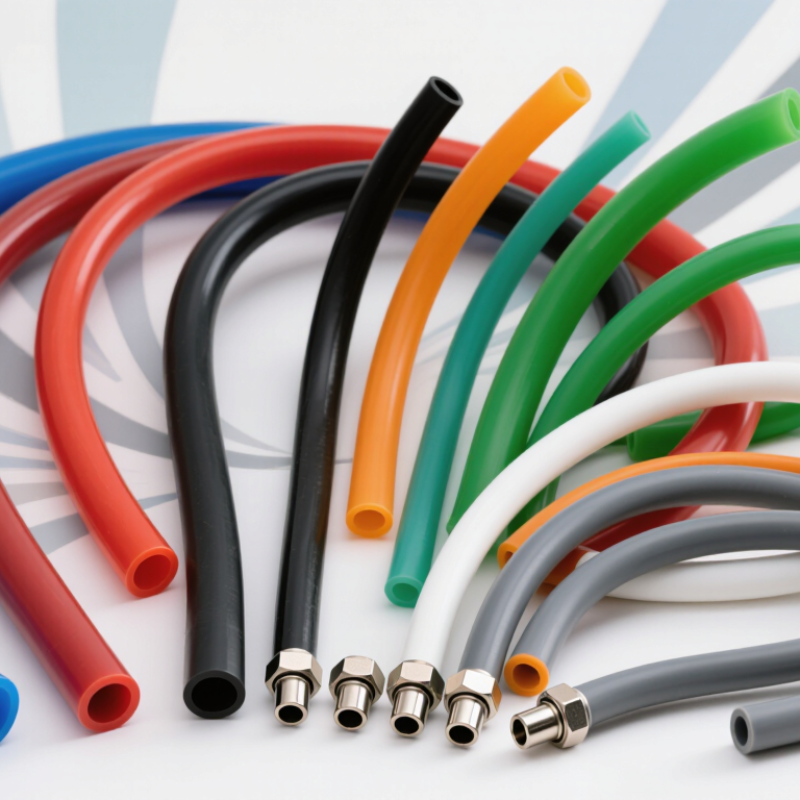
A silicone hose is a flexible tube made from silicone elastomer, selected for heat tolerance and flexibility. Its performance depends on more than the material name. Reinforcement may use textile plies or wire, helping the hose resist pressure, vacuum, or collapse. More layers can improve strength, but may also reduce flexibility and increase wall thickness. Check the application, not just the layer count. A tight engine bay, for example, may need a bendable hose, while a pressurized circuit needs verified pressure ratings.
Shore A hardness describes resistance to indentation; ASTM D2240 sets out the test method. It does not, by itself, predict burst pressure or service life. A harder compound may feel more substantial, but fit, temperature, fluid compatibility, and construction still matter. Numbers matter. Grand View Research estimated the global silicone market at USD 18.4 billion in 2023; that figure covers silicone products broadly, not silicone hoses alone. For hose comparisons, request test conditions and construction details, including inner diameter, wall thickness, reinforcement, and temperature limits. SAE J20 provides coolant-hose performance requirements for specified applications, but not every silicone hose is designed or qualified to meet them. A datasheet can leave gaps. Ask how samples were tested, and whether the stated ratings reflect continuous use or brief exposure.
Which Standards Matter? SAE J20, ASTM D412, ASTM D624, and FDA 21 CFR 177.2600
For global buyers, a silicone hose is only as reliable as its test evidence. SAE J20 sets performance requirements for automotive coolant hose, but the correct class depends on temperature, pressure, and fluid exposure. ASTM D412 measures tensile strength and elongation; ASTM D624 measures tear resistance. Neither method creates one universal pass mark. Ask suppliers for the exact test conditions, results, and hose construction—not just a standards list. A tidy certificate can still hide a mismatch.
Tips: Match the standard to the service. Check wall thickness, bend radius, and reinforcement against your installation. For food-contact applications, FDA 21 CFR 177.2600 specifies extraction limits for repeated-use rubber articles: water extraction is limited to 20 mg/in² during the first seven hours and 1 mg/in² during the following two hours. The regulation also sets separate limits for n-hexane extraction. Request reports for the finished hose, not merely raw silicone.
ASTM International’s D412 and D624 methods help buyers compare material behavior, while SAE J20 addresses hose performance in defined automotive uses. These references are useful, but they do not guarantee a hose will last in every real-world layout. Ask for lot traceability and repeat-test records. Then review them carefully. I would also verify whether the reported sample matches the production hose; that detail is easy to overlook, and it matters.
How to Compare Suppliers: Temperature, Pressure, Dimensions, and Test Data
Compare silicone hose suppliers using matched operating conditions, not headline ratings. Many datasheets quote service ranges near −50°C to +200°C, but continuous limits depend on compound, pressure, and exposure. Ask whether the stated temperature is continuous or brief, then request test conditions and aging results. A rating without a test method is weak evidence. Keep it simple.
Pressure figures need the same care. Check working pressure at your actual temperature, plus burst or proof-test results and sample size. ISO 1402:2021 specifies hydrostatic test methods for rubber and plastics hoses; it does not make unlike test conditions comparable. For dimensions, ISO 1307:2006 addresses hose bore and length tolerances. Compare measured inner diameter, wall thickness, reinforcement, bend radius, and tolerance—not just nominal size. A two-millimeter mismatch can turn a tidy assembly into a leak.
Request dated reports that identify the hose construction, test temperature, pressure, duration, and failure criteria. ISO 37:2017 covers tensile-property testing of rubber, while ISO 1817:2024 addresses liquid effects on vulcanized rubber. These tests help, but neither alone proves suitability for your fluid or installation. Honestly, a neat spreadsheet can still hide missing test details. Ask for traceable batch data, and note what remains unverified.
Common Silicone Hose Nominal Sizes
A dimensional reference for comparing supplier catalogs. The metric values are inch sizes converted to millimeters and rounded to one decimal place; availability varies by product and supplier.
When comparing suppliers: Confirm inside diameter, outside diameter, wall thickness, and dimensional tolerances. Compare pressure ratings at the intended temperature and bend radius, and request the supporting test data and test conditions. Temperature and pressure limits depend on hose construction and should be verified against the specific product datasheet.
10 Silicone Hose Manufacturers for Global Buyers: Products and Market Reach
A global comparison of silicone hose manufacturers should examine both product range and the markets each supplier can reliably serve. Look for straight, elbow, reducer, and multi-ply hoses, plus clear specifications for temperature, pressure, reinforcement, and working fluids. Detail matters: a polished catalogue means little if custom bends arrive late or dimensions vary between batches. Check whether suppliers support automotive, industrial, and food-processing applications, and whether they can provide traceable test records and consistent export packaging.
Market reach also needs context. OICA’s 2023 production statistics report about 93.5 million motor vehicles produced worldwide, indicating broad potential demand for automotive hose components. That figure is not a silicone-hose sales estimate. It does, however, show why regional distribution, production capacity, and dependable lead times matter to global buyers. Compare manufacturers’ documented export regions, local technical support, minimum order quantities, and quality systems such as IATF 16949 where automotive supply is relevant. A weakness in many shortlists is reliance on claimed reach; published evidence can be thin. Ask for destination references and sample inspection results before treating “global” as proven.
How to Qualify a Supplier: Traceability, Compliance, Sampling, and Lead Times
A silicone hose can look sound on a bench and still fail after repeated heat cycles. When evaluating manufacturers, ask how each production lot connects to its raw-material batch, mixing record, cure settings, and final inspection. Request a sample traceability record with sensitive commercial details removed. Check that material declarations and test reports match the hose grade and intended operating conditions. A neat certificate folder helps, but it does not prove that the documents describe your actual product.
Tips: Ask for a written compliance matrix covering temperature range, pressure, fluid exposure, and any required industry specifications. Confirm who issues each test report and when it was last updated. Keep answers in writing; a quick call can leave gaps.
Sampling should test the real geometry, not just a convenient straight section. Check wall thickness, bend behavior, fitting compatibility, and odor after the hose has been exposed to the intended fluid. Record acceptance criteria before testing. This is easy to overlook. Lead times also need detail: request separate estimates for tooling, sample approval, production, and shipping. Ask what happens if a test fails or a raw material is delayed. A supplier’s estimate may change, so confirm the schedule again before placing a time-sensitive order.