

Choosing the best Smart Parking System in 2026 means looking beyond polished dashboards. A useful system should help drivers find available spaces, give operators reliable occupancy data, and make daily parking easier to manage. The strongest options may combine sensors, cameras, mobile payments, and clear reporting—but more technology does not automatically mean better service. Sometimes, a simpler setup works better.
Parking scholar Donald Shoup wrote, “Cruising for parking is a serious problem in cities, and it is caused by underpriced curb parking.” His observation concerns parking policy, not a specific smart product. Still, it points to an important limit: technology can show where spaces are, but it cannot solve every pricing or street-management problem. That distinction matters when comparing systems.
This guide examines practical questions: How accurately does a system detect open spaces? Can it integrate with existing payment tools? What happens when a sensor fails or data arrives late? Operators should also consider installation costs, maintenance, accessibility, privacy protections, and the experience of drivers on a busy afternoon. A crowded curb tells the truth. A dashboard may not. The best choice depends on location, budget, and the problems a city or property owner actually needs to solve. Some claims deserve a closer look. A confident sales pitch is not the same as proven performance.
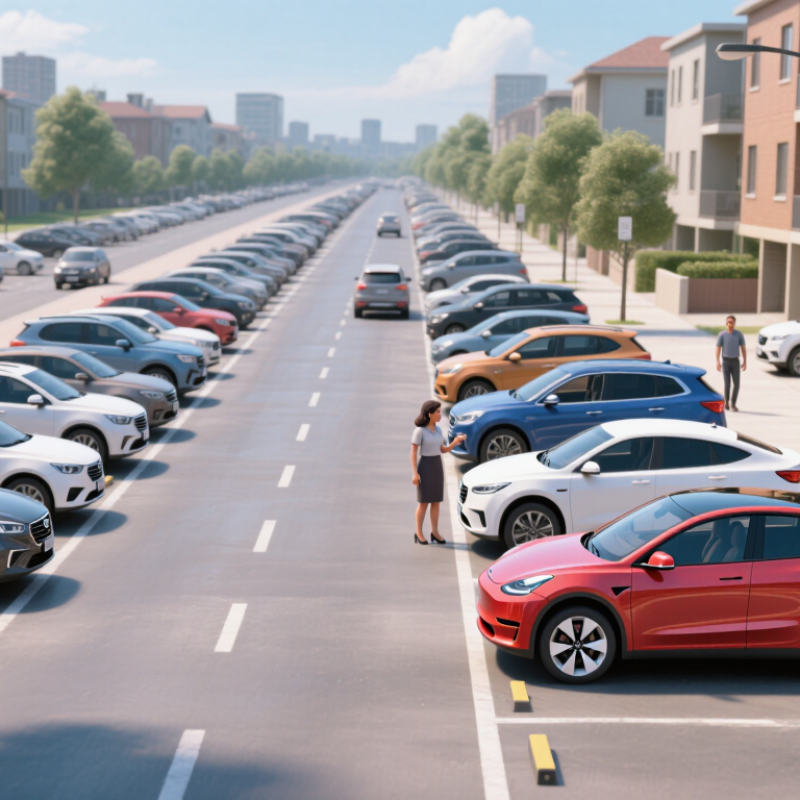
A smart parking system turns each bay into a small data point. An overhead camera or in-ground sensor detects whether a space is occupied, then sends an update through a gateway to a central platform. Drivers see availability on signs or an app. Operators monitor occupancy, turnover, and equipment faults. Some systems also connect reservations and payment. The core task is simple: keep space information current.
The 2017 Global Traffic Scorecard reported that U.S. drivers spent an average of 17 hours a year searching for parking. That figure explains the system’s appeal, but it does not guarantee savings. Sensors can misread a vehicle, and cameras can be blocked by snow or glare. Network delays can leave a supposedly open space occupied. Small errors matter.
Tips: Check how often occupancy data refreshes, and test the system during busy hours. Compare its displayed spaces with the actual lot. A dashboard may look precise, yet a driver needs dependable guidance at the entrance.
A capable smart parking system in 2026 depends on several parts working together, not on one impressive device. Space sensors can detect whether a bay is occupied, while cameras may read entry and exit activity. Some systems combine both, which can help when a sensor is blocked or a vehicle parks awkwardly. The trade-off is more equipment to install and maintain.
The data needs a reliable route to parking signs and management software. Wired connections suit many garages; wireless networks can be practical across open lots. Edge processing can keep basic detection running when a connection drops, while cloud tools help staff review occupancy trends. Entry gates, payment terminals, and accessible-space indicators may also connect to the same platform.
Still, readings are not perfect. A shaded camera or a sensor under a tall vehicle can report the wrong status. Staff need a clear way to correct errors.
Tips:
Test sensors during busy and quiet periods. Check the live count against a physical walk-through. Ask how long data is stored and who can access it.
Small details matter. A system is only useful when drivers can understand its signs, and staff can troubleshoot it without guesswork.
Decide which functions are essential before comparing systems; extra features can add cost without improving daily parking.
A strong smart parking system in 2026 should make the search shorter, not merely display more data. Compare detection accuracy, update speed, street and garage coverage, and performance during rain or peak demand.
INRIX’s 2017 parking study estimated that U.S. drivers spent 17 hours a year searching for parking, with $345 in related costs per driver. The figure is dated, but it shows why stale availability can frustrate drivers and waste time.
Ask vendors to demonstrate live occupancy against a manual count, block by block. Check how quickly a newly occupied space disappears from the app.
Coverage matters. A system that works only in one garage may leave curbside demand invisible. Review installation costs, maintenance needs, and integration with payment, access, and city traffic tools.
Look for clear data-retention policies and simple controls for staff. Accessibility deserves a real test: can a driver find an available space without small text, confusing maps, or several app screens? Small details matter.
Pilot the system during a busy, ordinary week, not just a polished demonstration. Record false vacancy alerts, outages, and the time staff spend resolving them. Request results by location and time of day; a citywide average can hide weak blocks.
No system is perfect. Even accurate sensors cannot fix unclear signs or awkward curb layouts, and that limitation should shape the comparison.
Smart parking is not one technology. It is a set of tools matched to a site. In-ground sensors detect whether individual spaces are occupied. They suit compact garages and busy curb zones, where staff cannot check every bay. Camera-based systems monitor several spaces at once, making them practical for open lots. Yet rain, glare, or blocked views can reduce accuracy. Small details matter.
Guidance systems combine occupancy data with signs or mobile maps, directing drivers toward open spaces. They work well in hospitals, campuses, and shopping districts with repeated peak periods. A 2017 Parking Pain report estimated that U.S. drivers spent 17 hours a year searching for parking. That figure is not a 2026 measurement, but it shows why reliable guidance matters. Reservations add value at airports and event venues, where arrival times and demand are easier to predict. Simple, but limited: a reservation system cannot create spaces during a sold-out event.
Automated parking lifts or moves vehicles inside a structure. They can help dense urban sites with little room for ramps, though maintenance and emergency access need careful planning. Curb-management platforms suit city centers with deliveries, accessible parking, and short-stay turnover. They need clear rules and accurate live data. Otherwise, the screen may promise a space that is already taken. A system should be judged by its site conditions, not by its most impressive feature.
The best smart parking system in 2026 depends on the site’s daily pressure, not its most impressive feature. A small clinic may need quick turnover and clear visitor directions. Space sensors and live availability can help drivers find open stalls without circling. A multi-level garage may need bay-level guidance, payment integration, and reliable equipment across floors. A residential lot has different priorities: resident access, guest permits, and simple administration. Small sites differ.
INRIX’s 2017 Parking Pain study estimated that U.S. drivers spent an average of 17 hours per year searching for parking. That figure is dated, so treat it as context, not a current forecast. A local occupancy audit is more useful: measure peak demand, turnover, and queues across several weekdays before choosing hardware.
For campuses or hospitals, also check walking distance and accessible-space availability. No sensor stays accurate without maintenance; rain, dirt, and changing layouts can distort readings. Ask suppliers how they handle faults, data privacy, and integration with existing payment or access tools. Then test the system in one busy zone. It may feel slower than a full rollout, but it exposes weak assumptions before they spread.