10 Best Traditional Cabinets for Your Kitchen?
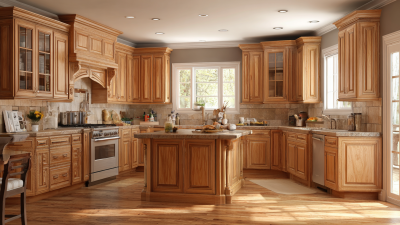
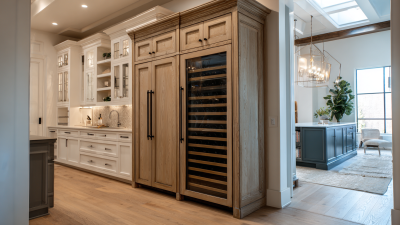
Choosing the right kitchen cabinetry can shape how a room feels, functions, and ages. Traditional Cabinets remain popular because they combine familiar proportions with durable materials and thoughtful detailing. Their framed doors, raised panels, crown molding, and warm wood finishes can make a kitchen feel established rather than temporary. Yet appearance alone should not decide the purchase. Daily cooking habits, storage needs, cleaning routines, and available space deserve equal attention.
This guide explores 10 best traditional cabinets for your kitchen, focusing on craftsmanship, construction, hardware, finish quality, and practical value. We consider features such as solid-wood frames, plywood boxes, soft-close hinges, adjustable shelves, and stain-resistant surfaces. Small details matter. A deep drawer can hold heavy cookware, while a narrow pullout may rescue an awkward corner beside the range. Reliable manufacturers should provide clear specifications, finish samples, warranty information, and installation guidance. These details help homeowners compare products with greater confidence.
No cabinet style is perfect. Dark finishes may show dust, ornate trim can complicate cleaning, and custom options often increase costs. Beauty is subjective. Even experienced designers can overlook how sunlight changes a finish throughout the day. Therefore, the recommendations balance visual character with long-term usability, repairability, and honest limitations. Before choosing, examine door samples in your actual kitchen and test the hardware by hand. A cabinet should look beautiful, but it must also survive ordinary mornings, spilled sauce, and years of opening and closing.
How NKBA Design Trends Define the Traditional Kitchen Cabinet Style
10 Best Traditional Cabinets for Your Kitchen?
How NKBA Design Trends Define the Traditional Kitchen Cabinet Style
Traditional kitchen cabinets remain popular because they balance familiarity, craftsmanship, and practical comfort. NKBA design trends often emphasize personalized storage, durable materials, and kitchens that support daily routines. These priorities shape today’s traditional style without making it feel frozen in the past.
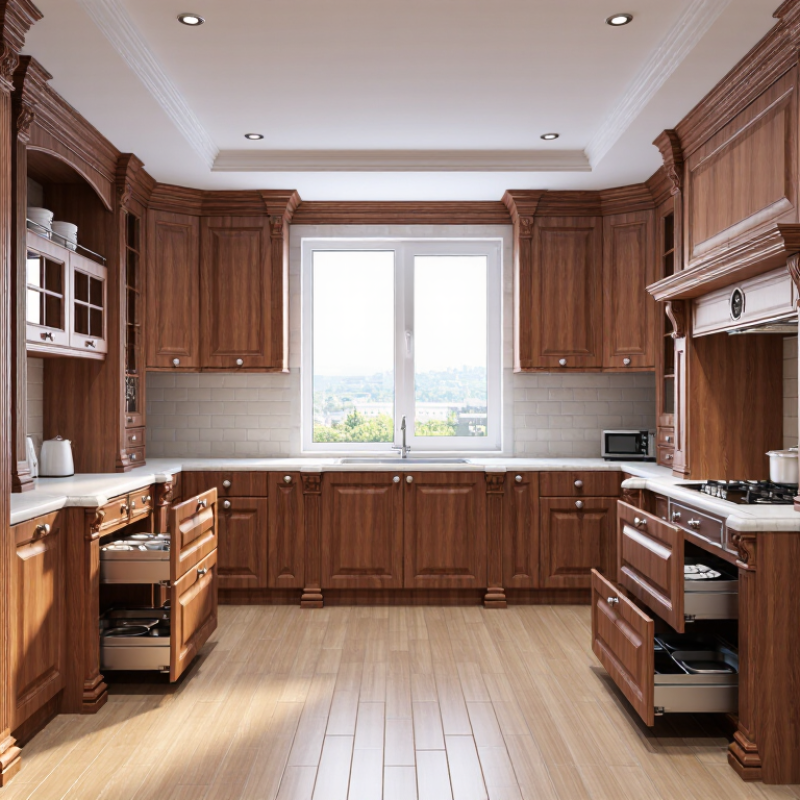
Look for framed doors, raised panels, and balanced proportions. Inset or overlay construction can create different levels of formality. Warm white, cream, muted green, and natural wood tones suit this approach. A professional designer may pair these cabinets with deep drawers, tray dividers, and pull-out shelves. The details matter. Soft-close hinges improve comfort, while furniture-like legs can add visual character.
Keep the layout honest.
Traditional kitchens usually benefit from symmetry, but perfect symmetry is not always practical. A slightly uneven wood grain can make the room feel more authentic. Still, too many decorative details may create visual weight. NKBA-informed planning encourages function alongside appearance, so cabinet depth, lighting, and clear work zones deserve careful attention. Glass-front doors can display dishes, while closed cabinets hide small appliances and cleaning supplies. Classic hardware, such as cup pulls or simple knobs, completes the look without overpowering it.
Not every traditional kitchen needs ornate cabinetry. A restrained design may age better and adapt more easily to changing household needs. That is where personal experience becomes valuable: observe how the kitchen is used before choosing a door style. A beautiful cabinet that frustrates daily movement is still a poor design choice.
Ranking Quality with KCMA A161.1 and ANSI Cabinetry Standards
10 Best Traditional Cabinets for Your Kitchen?
Traditional cabinets can look timeless, but appearance alone does not prove quality. A reliable ranking should begin with construction, performance, and documented testing.
ANSI/KCMA A161.1
provides recognized requirements for cabinet materials, finishes, doors, drawers, and structural performance. These criteria help evaluate how cabinets may handle repeated use, household moisture, and ordinary loading. Look for clear certification records, not only sales language. Documentation matters.
In my experience, a well-built cabinet feels stable before installation begins. Joints should align cleanly, doors should close evenly, and drawers should move without scraping. The finish should appear consistent around edges, corners, and exposed interior surfaces.
KCMA A161.1 certification can strengthen confidence, but it does not remove the need for inspection. Certification applies to tested construction, while your kitchen still demands accurate measuring and careful installation.
A perfect ranking is impossible. Personal use can expose weaknesses that testing does not reveal.
Tips:
Ask for the current certification scope and test information. Examine a sample door, drawer box, hinge, and cabinet back. Check whether shelves feel secure under realistic weight. Do not judge quality by thickness alone. Stronger materials can still perform poorly when assembled carelessly. Keep your expectations practical. Even certified cabinets may need adjustment after installation.
Comparing Hardwood, Veneer, MDF, and Plywood by Industry Data
10 Best Traditional Cabinets for Your Kitchen?
Traditional kitchen cabinets depend less on appearance than on core material performance. Hardwood offers strong screw holding and a warm, repairable surface. However, solid wood can expand and contract with seasonal humidity. Small gaps may appear around raised panels. That is normal, not always a manufacturing defect.
Veneer uses a thin hardwood layer over a stable panel. It provides authentic grain with less movement and lower material waste. MDF has a smooth, dense surface that performs well under painted finishes. Yet, exposed MDF edges can swell after repeated water contact. Plywood usually provides the best balance of strength, moisture tolerance, and weight. Industry testing frequently shows better fastener retention and dimensional stability than standard particle panels.
Details matter. A plywood cabinet box with poorly sealed edges can still fail near a sink. A hardwood door with careless installation can twist. Look for sealed cut edges, full-extension hardware, and joints that resist racking. Ask for moisture-resistance specifications, not vague claims. I have seen attractive samples hide weak backs and thin bottoms. That mistake is easy to miss in a showroom. Performance data helps, but installation quality remains an uncomfortable variable.
10 Best Traditional Cabinets for Your Kitchen? - Comparing Hardwood, Veneer, MDF, and Plywood by Industry Data
Comparative performance of traditional kitchen cabinet styles and commonly used construction materials
| # |
Traditional Cabinet Style |
Recommended Material Combination |
Typical Panel / Box Construction |
Typical Thickness
(mm) |
Moisture Resistance
(1–5) |
Repairability
(1–5) |
Relative Cost
(1–5) |
Expected Service Life
(Years) |
Best Use Case |
| 1 |
Classic Raised-Panel |
Hardwood frame and door with plywood cabinet box |
Solid wood rails and stiles; 18–20 mm plywood sides and shelves |
18–20 |
4 |
5 |
5 |
20–30 |
Formal kitchens and long-term installations |
| 2 |
Shaker |
Paint-grade hardwood or MDF door with plywood box |
Five-piece door; MDF center panel minimizes visible grain movement |
16–19 |
4 |
4 |
3–4 |
15–25 |
Versatile family kitchens and transitional interiors |
| 3 |
Inset Cabinet |
Solid hardwood face frame with plywood box |
Doors and drawers fit inside the face frame; precise 2–3 mm reveals |
18–20 |
4 |
5 |
5 |
20–30 |
High-end kitchens where furniture-like detailing matters |
| 4 |
Beadboard |
Hardwood frame with sealed MDF or veneered plywood panel |
Vertical bead detail in a framed door; sealed edges are essential |
16–19 |
3 |
3 |
3 |
12–20 |
Cottage, farmhouse, and coastal kitchens |
| 5 |
Furniture-Base Cabinet |
Hardwood legs and frame with plywood carcass |
Freestanding or furniture-look base with reinforced bottom and toe area |
18–20 |
4 |
5 |
4–5 |
20–30 |
Islands, pantry units, and open-plan kitchens |
| 6 |
Mission-Style |
Quarter-sawn hardwood veneer over plywood with hardwood trim |
Simple framed door with straight lines and visible natural grain |
16–19 |
4 |
4 |
4 |
15–25 |
Natural-wood interiors and historically inspired designs |
| 7 |
Glass-Front Traditional |
Hardwood frame with plywood box and tempered glass |
Framed doors with glass inserts; plywood provides stable shelf support |
18–20 |
4 |
4 |
4 |
15–25 |
Display storage for dishware, books, and collectibles |
| 8 |
Louvered Traditional |
Hardwood or veneer over plywood; fully sealed louvers |
Angled slats increase visual detail but require careful finishing and cleaning |
16–19 |
3 |
3 |
4 |
12–20 |
Ventilated furniture sections and decorative accent doors |
| 9 |
Painted Flat-Panel |
Factory-finished MDF doors with plywood cabinet box |
Smooth center panel gives a consistent painted surface with low grain telegraphing |
16–19 |
3 |
3 |
3 |
12–20 |
Budget-conscious traditional kitchens with painted finishes |
| 10 |
Natural-Veneer Classic |
Hardwood veneer over moisture-resistant plywood with solid-wood edging |
Thin real-wood surface layer bonded to a stable engineered core |
16–19 |
4 |
4 |
3–4 |
15–25 |
Authentic wood appearance with improved dimensional stability |
Data notes: Thickness values reflect common cabinet-door, side-panel, and shelf specifications. Ratings use a five-point comparative scale, where 5 indicates stronger performance. “Veneer” is a real-wood surface layer and must be evaluated together with its substrate. Service-life ranges assume proper installation, sealed edges, normal indoor humidity, and routine maintenance. Moisture resistance does not mean waterproof performance.
Ten Traditional Cabinet Picks Ranked for Durability, Storage, and Cost
10 Best Traditional Cabinets for Your Kitchen?
Choosing traditional cabinets requires more than admiring raised panels and warm wood tones. I ranked ten practical options by durability, storage, and cost. The ranking reflects common construction standards, daily kitchen use, and realistic renovation budgets.
Hardwood-frame cabinets rank first for strength, but they can be expensive. Choose them when heavy cookware and frequent use demand sturdy joints. Plywood-box cabinets rank second because they resist moisture better than particleboard. They also hold screws securely. Shaker-style cabinets rank third for simple repairs and flexible storage. Their flat center panels are easier to clean. Inset cabinets rank fourth for precise craftsmanship, although installation costs can rise quickly.
Painted maple cabinets take fifth place. They offer a smooth finish, but chips may show around busy handles. Oak cabinets rank sixth for affordability and visible grain. That grain divides opinions. Furniture-style cabinets rank seventh, providing attractive drawers and useful deep storage. However, decorative legs can reduce cleaning access. Veneer-faced cabinets rank eighth because they balance appearance and cost. Quality varies greatly.
Stock traditional cabinets rank ninth for fast delivery and lower prices. Measure carefully; small errors become costly. Semi-custom cabinets rank tenth only because their value depends on the supplier and installer. My ranking is not absolute. I once underestimated corner storage, leaving an awkward space beside the sink. A rotating tray would have helped. Check hinge quality, drawer capacity, finish samples, and warranty terms before ordering. A beautiful cabinet still fails when it wastes daily space.
Applying NKBA’s 36-Inch Work-Aisle Guideline to Cabinet Selection
Traditional cabinets can make a kitchen feel grounded, but their decorative details consume aisle space.
The NKBA’s often-cited 36-inch figure is best understood as a clear circulation minimum. An active work aisle usually needs more: 42 inches for one cook, or 48 inches for several cooks. Measure between finished cabinet faces, not box edges. Include handles, appliance doors, and open drawers.
For a traditional layout, choose cabinet depths and profiles before choosing door styles. A framed cabinet with thick rails may project farther than expected. Raised panels, crown trim, and oversized pulls can quietly reduce usable clearance. Near a range, protect the aisle from protruding hardware. Near a refrigerator, allow the door to open without blocking the opposite counter. These details matter during real cooking.
Use painter’s tape to mark both cabinet runs on the floor.
Walk through the taped space while carrying a pan. It feels different. If the passage measures only 36 inches, reserve it for lighter traffic when possible. Place tall pantry units away from the narrowest turn. I would sacrifice one decorative filler before sacrificing elbow room. Still, this is not a perfect rule. Mobility needs, appliance specifications, and local code can change the result. Have the final plan checked by a qualified kitchen designer or building professional.