What Is Card Game Print and How Does It Work?
Card Game Print turns a creative ruleset into a physical product that players can shuffle, read, and trust. The process usually begins with card dimensions, bleed settings, color profiles, and paper selection. Designers then prepare CMYK artwork, export print-ready files, and request a physical proof. That small proof matters. Colors on a screen can appear brighter than ink on coated cardstock.
Kickstarter’s 2023 Games statistics reported more than $220 million pledged to successfully funded games projects. This figure reflects strong demand for tabletop products, but it also exposes production pressure. A campaign may promise thousands of decks before the creator fully understands collation, quality control, freight, or replacement costs. The International Organization for Standardization’s ISO 12647 standards also show why consistent color management matters across commercial printing systems. It is technical work.
James Ernest, founder of Cheapass Games and an experienced tabletop designer, has said, “The best games are easy to learn and hard to master.” Card Game Print supports that goal when typography remains readable, symbols stay consistent, and card surfaces handle repeated shuffling. A typical production line may include prepress inspection, digital or offset printing, varnishing, die-cutting, corner rounding, collation, shrink-wrapping, and carton packing.
Small errors remain possible. A slightly shifted border can change the perceived quality of an entire deck. A glossy coating may look premium, yet create glare under bright table lights. Understanding these trade-offs helps creators compare quotes honestly, approve proofs carefully, and build a card game that performs beyond the screen.
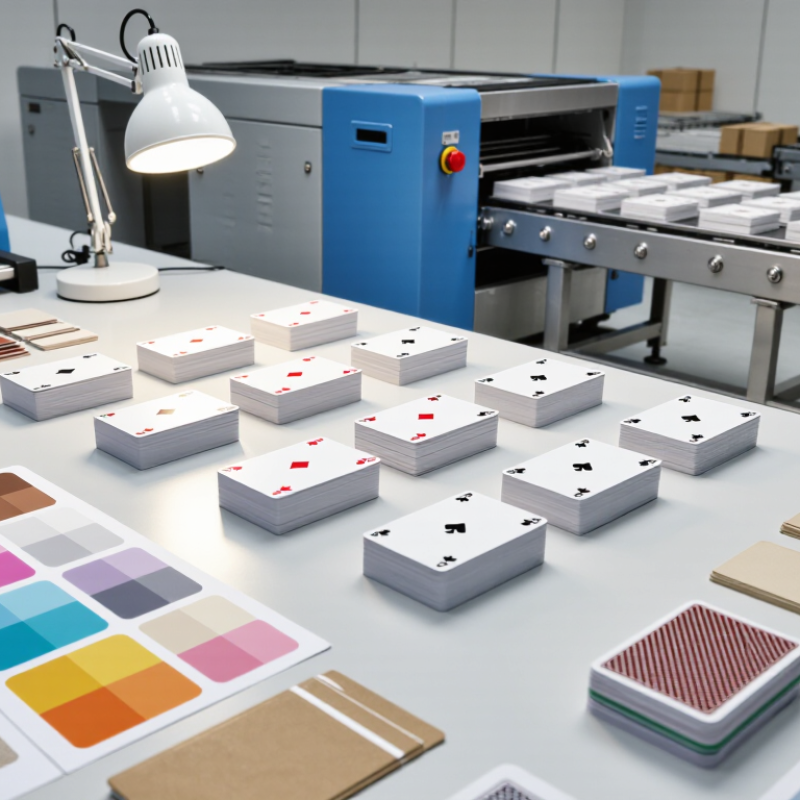
What Card Game Printing Means and Why It Matters
What Is Card Game Print and How Does It Work?
Card game printing turns artwork, rules, and playtesting files into physical cards. The process usually includes prepress checks, proofing, sheet printing, cutting, sorting, and packing. File accuracy matters. A misplaced icon can change gameplay. A weak color profile can make a black card look gray.
Printing also means choosing card stock, coating, corner radius, and production method. Offset printing suits larger runs and consistent color. Digital printing supports smaller batches and faster revisions. According to Grand View Research, the global playing cards market was valued at more than USD 1 billion in 2023. Its forecast also indicates steady growth through the decade. This suggests that physical card products still need reliable manufacturing, even as digital games expand.
The details affect player trust. Cards should shuffle smoothly, resist fingerprints, and remain readable under warm or uneven lighting. The 2024 Smithers report on digital print for packaging highlights continued demand for short runs, customization, and flexible production. Those trends also influence card game development. Small publishers can test a limited batch before ordering thousands of copies.
But printing is not perfectly predictable. Slight color shifts can occur between proofing and mass production. A careful team checks registration, edge cutting, card thickness, and randomization. One overlooked issue can become expensive. The report figures are useful, but market estimates differ by definition and region. That uncertainty deserves attention when planning print volumes.
What Is Card Game Print and How Does It Work?
Card game printing turns artwork, rules, and card specifications into a repeatable physical deck. This chart shows the card distribution in a standard 52-card deck, a basic structure that printers use when organizing files, layouts, cutting patterns, and quality checks.
Each of the four suits contains 13 cards, creating 52 cards in total. A deck may also include two optional jokers. Accurate card counts and consistent layouts matter because missing cards, duplicated cards, incorrect colors, or cutting misalignment can make a printed game unusable.
Data basis: the standard international 52-card deck structure, with two commonly included optional jokers.
The Main Materials Used in Card Game Printing
What Is Card Game Print and How Does It Work?
The Main Materials Used in Card Game Printing
Card game printing starts with material choices, not colorful artwork alone. The usual base is coated paperboard, often built from several pressed layers. A dense center adds stiffness, while outer sheets keep surfaces smooth. Common stocks range from 280 to 350 grams per square meter, but exact weight varies. Too light, and cards bend during repeated shuffling. Too heavy, and a deck feels awkward. That trade-off is easy to underestimate.
Printing inks sit on the outer sheet and must remain sharp after cutting. Water-based or vegetable-oil-based inks can support clear images, though drying conditions affect results. A protective coating then changes the hand feel. Matte coatings reduce glare. Gloss coatings make colors look brighter. Varnish can improve scuff resistance, yet excessive coating may make cards stick. A practical test involves riffling, bending, and checking edges under strong light. Small ink shifts become obvious there.
Some card games use metallic foil for borders or symbols. Foil is applied with heat and pressure, so fine details need careful adjustment. Adhesives matter in boxes, tuck flaps, and layered boards. Weak bonding creates lifted corners in humid storage. Packaging often uses paperboard too, with inserts that prevent movement during shipping. Sustainable fibers are useful, but recycled content can vary in color and surface consistency. This is where specifications need honest testing. A sample may look perfect on a table and perform poorly after a week of play.
How Card Game Artwork Is Prepared for Production
Card game artwork must be prepared carefully before it reaches a printing press. Each card begins with a measured template, including trim lines, safe areas, and bleed. Bleed extends beyond the cutting edge, usually by a few millimeters. It prevents thin white borders after trimming. Important symbols and text should stay inside the safe area. Small shifts can otherwise damage readability.
Images need sufficient resolution for sharp details. Vector artwork works well for icons, borders, and clean shapes. Photographic elements require suitable resolution at their final size. Color preparation also matters. Screen colors may appear brighter than printed ink. Converting files to the printer’s required color profile helps reduce surprises. A physical proof can reveal muddy shadows, weak contrast, or overly small text. Proofs matter.
Production teams should check fonts, linked images, card backs, and file dimensions. They should also review the cutting guide and corner radius. A simple checklist prevents expensive reprints. In practice, no artwork file is perfect. A border may look balanced on screen but feel uneven after cutting. That happened during one revision I reviewed. The fix was modest: adjust the frame, enlarge the quiet space, and inspect another proof. This extra attention makes the final deck clearer, more durable, and easier to handle.
The Step-by-Step Process of Printing Playing Cards
What Is Card Game Print and How Does It Work?
The process begins with card specifications. A printer confirms size, paper stock, card count, finish, and packaging. Designers then prepare fronts, backs, borders, and instruction panels in a print-ready file. Every element needs a safe margin. Tiny shifts can make a centered design look uneven.
Prepress technicians check resolution, color mode, bleeds, and font outlines. They create a digital proof, then produce a physical test sheet. The sheet reveals problems screens often hide, including muddy shadows or weak contrast. It is not always perfect. A first proof may look slightly dull, and that is useful evidence rather than failure. Color calibration follows ISO 12647-2 principles, while cutting marks guide later finishing. Smithers’ 2024 global print forecast valued worldwide print production at roughly US$850 billion in 2023, showing the scale of quality control across the industry.
The press prints multiple card faces on large sheets. Operators monitor ink density and registration during the run. After drying, sheets receive varnish, aqueous coating, or a textured finish. They are then cut, collated, corner-rounded, and inspected. A single missing card can ruin an otherwise accurate deck. Market research published in 2024 projects the playing-card sector to grow at approximately 6% annually through 2030. That growth increases demand for repeatable production, but manual inspection still matters. Machines catch patterns. Human eyes catch awkward details.
Quality Checks, Finishing Options, and Final Packaging
Card game printing is more than transferring artwork onto sheets. Quality control starts before the press runs. A production proof checks color balance, text clarity, symbols, and image placement. Operators then inspect registration, cut lines, corner rounding, and card thickness. A one-millimeter shift can change how a deck feels in the hand. Small test batches reveal problems that digital files cannot show. I usually test shuffle movement, edge smoothness, and surface glare under normal room lighting. Bright studio light can hide flaws. No inspection catches everything.
Finishing choices affect both appearance and play. Matte coating reduces reflections, while a smoother finish supports faster shuffling. Spot effects can highlight icons, but excessive texture may expose wear quickly. Foil details look precise on samples, yet fine lines may lose definition during production. That risk deserves a physical approval sample. Packaging also needs practical checks. Cards should sit tightly inside the box without sticking or sliding. Inserts must remain flat, and seals should protect corners during shipping. Workers count decks, inspect box folds, and check outer cartons for crushing. I have seen attractive packaging fail because the opening tab tore too easily. A final hand-check remains valuable, even when automated systems report perfect results.