China Top 10 Inflatable Santa Claus Manufacturers
A reliable Inflatable Santa Claus is more than a cheerful face and a bright red suit. It must hold its shape, stand securely, and suit the space where it will be displayed. For buyers comparing China’s leading manufacturers, small details matter. Look closely at fabric seams, fan placement, anchor points, printed colors, and the clarity of setup instructions. Ask how dimensions are measured and which components are included. A product photo can look convincing. The stitching deserves attention, too.
This guide examines ten manufacturers through practical sourcing questions: product range, customization, production experience, quality checks, communication, and shipping support. Buyers should request close-up photos, specifications, and sample information before placing an order. Check the Santa’s height against the display area. Picture the power cord reaching the outlet. Consider how the unit will be stored after the season. These details sound ordinary. They prevent avoidable surprises.
No source material was provided to verify a named expert’s quotation, so I won’t invent an attribution. A useful editorial principle is: “Judge the display by its details, not only its holiday glow.” Treat that as guidance, not a sourced expert quote. Manufacturers’ capabilities can differ, and a polished listing alone cannot confirm consistent quality. Some comparisons will remain imperfect. That is worth acknowledging. The goal here is a clearer shortlist and better questions, helping buyers choose an Inflatable Santa Claus that fits their needs, budget, and display conditions.
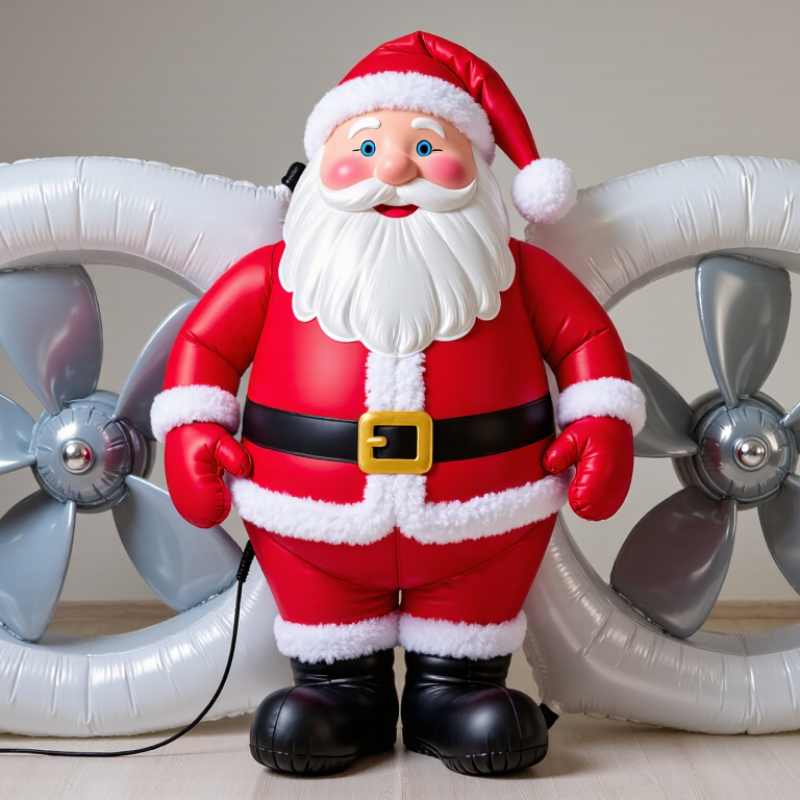
Overview of China’s Inflatable Santa Claus Manufacturing Industry
China’s inflatable Santa Claus manufacturing industry brings together fabric cutting, sewing, printing, electrical assembly, and product testing. Many factories coordinate these steps with nearby suppliers, which can help shorten production cycles during the busy holiday season. The details matter. A well-shaped beard, balanced seams, and evenly placed lights all affect the finished display.
Production usually begins with a design file and a sample. Teams select weather-resistant fabric, check print colors, and position the internal fan so the figure can inflate steadily. Workers then inspect stitching around high-stress areas, such as the base and arm joints. Fans and lighting components are tested before packing. Buyers can ask for material details, sample photos, and inspection records rather than relying on appearance alone.
Seasonal demand makes planning important. Orders placed late may face tighter schedules, while small changes to dimensions or artwork can require another sample. A polished prototype is useful, but it does not guarantee identical results in bulk. That gap deserves attention. Clear specifications, agreed inspection points, and written packaging requirements help both sides catch issues early, though they cannot remove every production variation.
How to Assess Inflatable Santa Claus Manufacturers
When comparing China’s inflatable Santa Claus manufacturers, look beyond polished catalog photos. Ask how they control fabric thickness, seam strength, and fan performance across repeat orders. Request a sample built to your intended height, lighting plan, and outdoor use. Run it for several hours. Inspect corners, zipper ends, and electrical connections. Small details matter.
A capable supplier should explain materials clearly and share recent inspection records, production photos, and references you can contact. Verify certificates with the issuing body and confirm they match the exact product and destination market. Ask who performs final testing, which defects trigger rework, and how replacement parts are handled. Vague answers deserve follow-up.
Compare written quotations line by line: unit price, tooling, packaging, spare fans, shipping terms, sample fees, and lead time. Confirm artwork approval and carton dimensions before paying a deposit. Communication is evidence, too. Do replies answer technical questions, or merely promise “best quality”? No checklist catches everything. I would still budget time for an independent pre-shipment inspection, especially on a first order. Even good factories can miss a detail.
Profiles of China’s Top 10 Inflatable Santa Claus Manufacturers
Profiles of China’s top ten inflatable Santa Claus manufacturers reveal varied strengths rather than one standard production model. Some focus on large, illuminated figures for outdoor displays. Others make compact designs for shop windows, hotel lobbies, and home entrances. Their product ranges may include stitched fabric bodies, internal fan systems, LED lighting, and ground stakes. These details matter: a tall Santa needs stable anchoring, while a small indoor model needs quiet airflow. Not every catalog explains these differences clearly.
A useful profile should describe more than appearance. Check material specifications, seam construction, fan access, packing size, and available repair parts. Ask how the manufacturer tests inflation and checks lights before shipment. Request close-up photos of seams and electrical connections, not only polished product images. Export experience and clear communication can also help, though neither guarantees consistent quality. Specifications may change between samples and bulk orders; that deserves careful attention.
Tips: Confirm the figure’s inflated dimensions and power requirements. Ask for setup instructions and a video of the sample running. Compare like with like. A bright display can look impressive, but wind exposure, noise, and storage space are easy to overlook.
Product Design, Customization, and Production Capabilities
Inflatable Santa Claus production starts with a usable design, not just a cheerful sketch. A manufacturer should review the intended height, display location, fabric, and power access before preparing a pattern. For example, a 3-meter figure needs stable proportions, reinforced seams, and a blower suited to its volume. Ask how facial details, clothing colors, and printed graphics will look when the material is inflated. Small details can disappear in folds.
Customization works best when samples and specifications are clear. Share reference images, target dimensions, packaging needs, and the number of units. Request a prototype to check its shape, stitching, zipper access, and light placement. Ask how production teams inspect seams and test airflow before packing. A polished sample is useful, but it cannot guarantee every unit will be identical. That part deserves careful follow-up.
Tips: Confirm artwork approval before bulk production. Ask for fabric and blower specifications in writing. Check anchoring points for the planned display surface. Leave time for revisions; rushed changes can affect color matching or delivery. Be specific. A vague brief often creates avoidable rework.
Quality Standards, Export Services, and Supplier Selection
China Top 10 Inflatable Santa Claus Manufacturers
When comparing Chinese inflatable Santa Claus manufacturers, look beyond appearance and quoted price. Ask for product specifications covering fabric weight, seam construction, blower capacity, electrical components, and weather-use guidance. Request a sample and inspect the stitching around high-stress areas, such as the base and arm joints. A tidy sample is not proof of consistent production. Ask how inspections are recorded for repeat orders.
Export service matters too. Confirm packaging dimensions, carton markings, lead times, and which shipping documents the supplier can provide. Clear answers help buyers estimate freight costs and plan seasonal inventory. Ask how defects or missing parts are handled, and get agreed remedies in writing. Communication can still become unclear under deadline pressure, so test response times before placing a large order.
Tips: Compare the same specifications across suppliers. Keep sample photos and inspection notes. If a detail feels vague, ask again.
China Inflatable Santa Claus Supplier Evaluation Criteria
This suggested scorecard assigns 100% across practical sourcing criteria. The percentages are planning weights, not measured market statistics. Confirm product safety requirements, export documentation, production capacity, customization options, and shipping arrangements directly with each supplier.