How to Choose the Best School Desk for Your Needs?
Choosing the right School Desk is crucial for every student’s learning experience. According to educational expert Dr. Emily Hart, “The right furniture can greatly enhance a child's focus and creativity.” A well-designed school desk offers comfort, support, and functionality for various tasks.
In today's market, there are numerous options available. Selecting the ideal school desk can be overwhelming. Factors such as size, style, and ergonomics play vital roles. Students need desks that encourage good posture and fit their study habits. However, many overlook these details in their choices. This oversight can affect their academic performance and overall comfort.
Investing in the right school desk requires careful thought. Seek designs that blend functionality with aesthetic appeal. Consider the desk's durability and the space it occupies. A thoughtful choice can lead to years of benefit, while a poor one may lead to discomfort. Reflect on your needs and preferences to make the best decision.
Understanding Your Space and Ergonomic Needs
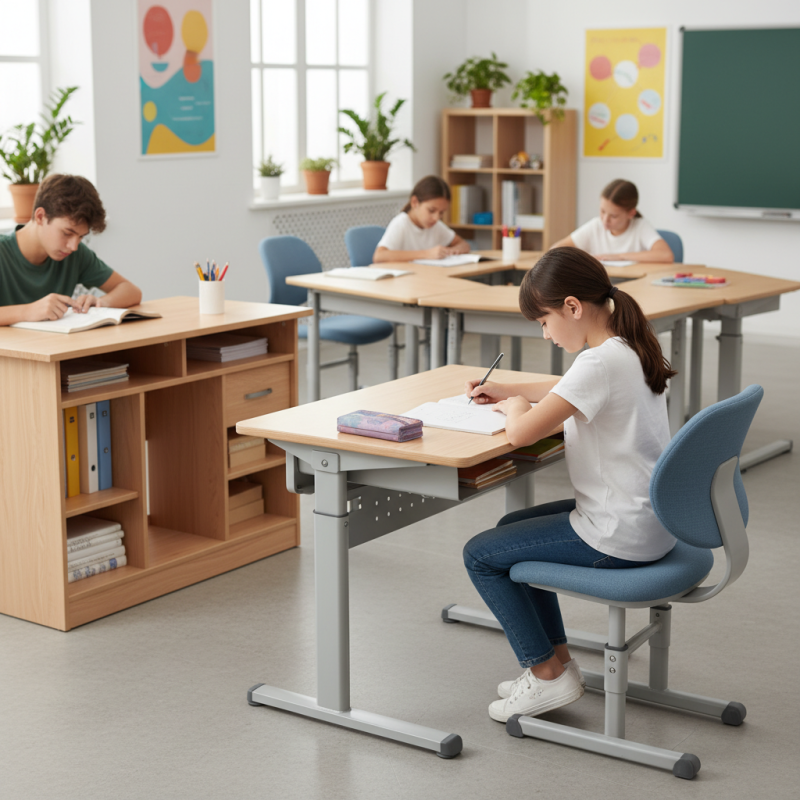
Selecting the right school desk involves understanding your unique space and ergonomic needs. Studies show that an improper desk height can lead to long-term health issues. According to the American Academy of Pediatrics, a desk that is too high or low can cause back pain and hinder concentration.
When evaluating your workspace, consider the desk's height and adjustability. A desk should allow your elbows to rest comfortably at a 90-degree angle. Many educators recommend desks that are adjustable. This ensures they can accommodate students of varying heights.
Tips: Measure your space before purchasing. Ensure there is enough room for movement.
Think about storage options, too. A clutter-free desk enhances focus. Research indicates that organized spaces promote better learning outcomes. However, many desks lack adequate storage, leading to chaos. Reflect on your storage needs when making a choice.
Tips: Choose desks with built-in shelves or drawers. This addition can keep materials organized and accessible.
Exploring Different Types of School Desks and Their Features
When selecting a school desk, it's essential to consider different styles and their unique features. A traditional desk provides a classic workspace, but it may lack flexibility. On the other hand, ergonomic desks promote good posture, which is crucial for health. They often feature adjustable heights, making them suitable for various users. Collaborative desks encourage group work, fostering communication among students.
Tips: Measure your space before purchasing. Ensure the desk fits well in the room. Look for desks with storage options to help keep materials organized. Adjustable desks can adapt to growth, saving money in the long run.
Choosing a desk is not just about aesthetics. Think about the comfort and usability. It’s sometimes tempting to prioritize style over function, leading to discomfort during long study sessions. A desk that looks great might not support good work habits. Experiment with different styles and features to discover what truly works for you. Don’t hesitate to seek feedback from peers or educators on their preferences.
Comparison of Different Types of School Desks
Evaluating Materials and Durability for Long-Term Use
When selecting a school desk, materials play a crucial role in durability. Desks made from solid wood offer stability and longevity. However, they can be heavy and expensive. Metal desks, on the other hand, provide robust support but may scratch easily. Consider how often the desk will be moved. Lightweight options are more convenient but could compromise sturdiness.
A desk’s finish also matters significantly. A smooth surface is essential for writing and studying. Look for desks with easy-to-clean finishes. This helps in maintaining the desk over time, particularly in active environments. Some finishes can wear out quickly, leading to an unsightly appearance. Balancing aesthetics and practicality is key.
Reflecting on personal needs is vital. A desk’s size should accommodate all necessary materials without overcrowding the space. However, bigger desks might consume more room. Think about the desk's purpose. Is it mainly for homework or art projects? Understanding your needs can help in making an informed choice that stands the test of time.
Choosing the Right Size for Comfort and Functionality
Choosing the right size desk is crucial for comfort and productivity. A desk that is too small can lead to clutter and distractions. Conversely, a desk that is too large may create unnecessary space, making it hard to focus. Start by measuring your available space. Ensure you have enough room for your legs and any chair.
When selecting a desk, consider the height. A desk should allow you to work comfortably while sitting. Your elbows should be at a 90-degree angle when typing. If a desk is too high or low, it can lead to discomfort. An adjustable desk is a wise option for growing children or varied tasks.
Tips:
Look for desks with ample surface area. This allows for books, a computer, and other supplies without feeling cramped. Pay attention to the width. If you need extra monitors, ensure your desk can accommodate them. Finally, don’t forget to test the desk. Sit and stand if possible. This simple act can provide significant insights into your comfort level.
Considering Budget and Additional Features for Value
Choosing the right school desk requires careful consideration of your budget and additional features. A recent report by the National Retail Federation found that 55% of families prioritize cost when purchasing educational furniture. Understanding where to allocate your budget is essential. A sturdy desk may cost more upfront but could save you in the long run. Adjustability is another critical factor to consider. Desks that can grow with your child are often worth the investment.
Moreover, additional features like built-in storage or ergonomic design can enhance the overall value. A study from the American Academy of Pediatrics suggests that comfortable seating can improve focus. Desks with adjustable heights also promote better posture, reducing the risk of discomfort. While these features may increase the cost, their long-term benefits make them a smart choice. However, it’s easy to overspend on trendy designs that do not offer true functionality. Reflect on what truly supports learning over aesthetic appeal.
Don't forget to consider the available space. Many families redecorate often or move. Selecting a desk with a simple design can facilitate this. Some features may not be essential for all students. Evaluate what works best for your child’s study habits before making a final decision. An informed choice blends budget, necessary features, and future needs.