

How to Choose the Best Metal Cutting Board?
A Metal Cutting Board can look simple: a cool, hard surface beneath a sharp knife. Choosing one takes more care. Metal type, surface finish, thickness, stability, and cleaning needs all affect daily use. A polished steel board may wipe clean quickly, while a textured surface can feel different under a blade. Neither detail alone proves that a board suits every kitchen. Your knives, cutting habits, and tolerance for noise matter too.
One source detail is missing: no article or verifiable industry-expert quotation was provided. I won’t invent a name or attribute an unsourced statement. A verified quotation can be added here: “[Insert an exact, sourced quote from a named metal cutting board expert.]” This guide will compare practical features, including edge wear, slipping, corrosion resistance, and care instructions. It will also separate measurable specifications from broad marketing claims. Check the manufacturer’s material details, inspect the board’s edges, and consider whether it moves on your counter. Small things count. A board that is awkward to lift or loud during chopping may stay unused. Metal can be durable, but it is not automatically the best choice for every cook. That point deserves a closer look.
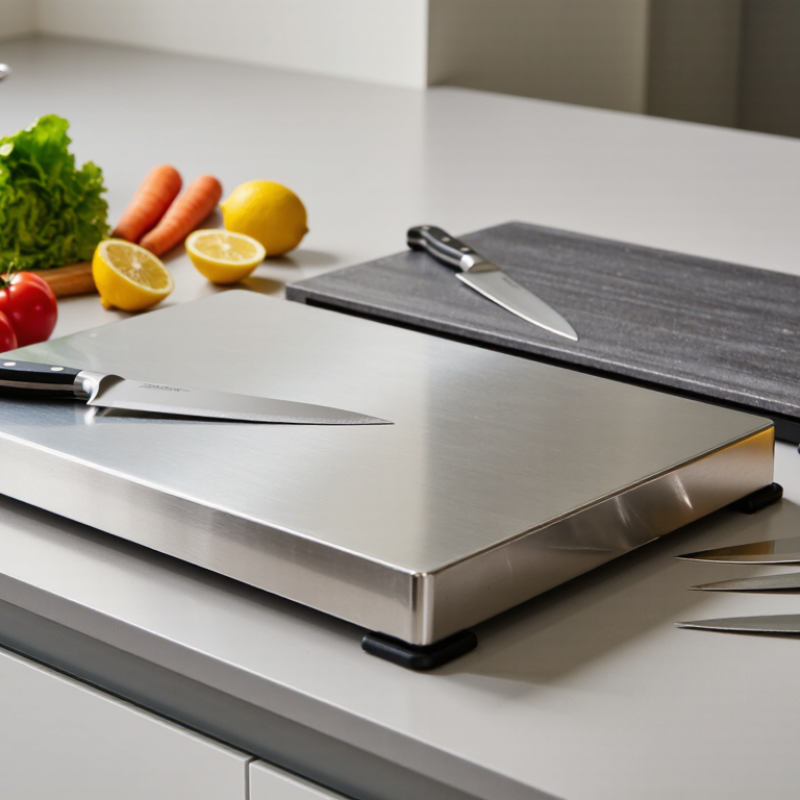
Understanding How Metal Cutting Boards Differ from Other Board Types
Metal cutting boards feel very different from wood or plastic. Their nonporous surface does not absorb juices, and it is generally straightforward to wash. That can be useful when handling messy ingredients. Still, a clean-looking surface is not proof of safe handling; wash it with hot, soapy water after use, especially after raw meat. Metal is also much harder than typical board materials, so repeated chopping can dull knife edges faster. The sound is sharper, too. The clang is real. Some cooks find it distracting.
Grip and stability matter as much as material. A smooth metal board may shift on a wet counter, so look for a secure nonslip base and check that it stays put under light pressure. Thin boards can flex or rattle. Their hard surface may also make delicate slicing less comfortable. Wood and many plastic boards offer more cushioning, while plastic can be easier on knives and may be dishwasher-safe if its care instructions allow it. Metal suits tasks such as rolling dough or cutting foods where easy surface cleanup matters, but it may not be the best everyday chopping choice. I would not choose one as my only board without first considering my knives, counter space, and tolerance for noise.
| Comparison Factor | Stainless Steel | Wood | Plastic | Bamboo | Glass or Ceramic |
|---|---|---|---|---|---|
| Effect on knife edges | Very hard; repeated cutting can dull or damage knife edges more quickly. | Generally gentler on knife edges, especially with a well-maintained, end-grain surface. | Usually more forgiving than metal, glass, or ceramic. | Harder than many wood boards and can dull knives faster than softer wood. | Very hard; cutting on the surface can quickly dull or chip knife edges. |
| Cleaning and water resistance | Nonporous and easy to wipe clean; wash and dry according to the product instructions. | Requires careful washing and prompt drying; do not leave soaking in water. | Usually easy to wash; many types are dishwasher-safe, but check the manufacturer’s instructions. | Wipe clean and dry promptly; prolonged soaking can cause damage. | Nonporous and easy to clean, but edges can chip or break if dropped. |
| Cut marks and surface wear | Can show scratches and knife marks; deep damage or rough edges may make cleaning less convenient. | Develops cut marks over time; some boards can be resurfaced, depending on construction. | Can develop grooves that may be difficult to clean thoroughly; replace heavily scored boards. | Can show knife marks; repair options depend on board construction. | Resists knife grooves, but the brittle surface may chip or crack. |
| Grip and cutting feel | May feel slippery, especially when wet; use a stable, nonslip base. | Often provides a stable, relatively comfortable cutting surface when properly secured. | Lightweight boards can slide; a damp towel or nonslip feet can help. | Can be firm and stable, but lightweight boards may still move during use. | Can be slippery and hard; secure it carefully before use. |
| Noise and comfort | Hard surface can make chopping noticeably louder and less comfortable. | Typically quieter and more comfortable for routine chopping. | Generally quieter than metal, glass, or ceramic. | Firm surface; noise and comfort vary with thickness and construction. | Hard, loud, and uncomfortable for frequent knife work. |
| Maintenance | Usually needs no oiling; dry after washing to reduce water spots and keep the surface in good condition. | May need occasional food-safe mineral oil; keep dry and follow care instructions. | Usually low-maintenance; inspect for deep cuts and follow washing guidance. | Often benefits from prompt drying; follow the maker’s care guidance, which may include occasional oiling. | Low routine maintenance, but handle carefully to avoid chips and breakage. |
| Best suited to | Tasks where a nonporous, easy-to-wipe surface is useful; generally not the best choice for everyday knife chopping. | Frequent kitchen knife work when the board is cared for properly. | Everyday food preparation and situations where easy washing is a priority. | A firm, lightweight alternative for general food preparation, with attention to knife wear. | Serving or non-knife tasks rather than routine chopping. |
| Key buying consideration | Choose a smooth, food-contact-suitable product with stable, nonslip support; consider knife wear and cutting noise. | Consider board thickness, stability, wood construction, and willingness to maintain it. | Look for a stable board that is easy to clean; replace it when deeply scored or damaged. | Check stability, construction, and care instructions; expect a firmer feel than many wood boards. | Choose only if you need a serving or non-cutting surface, not a knife-friendly chopping board. |
Care and dishwasher guidance can vary by product. Use separate or thoroughly cleaned boards for ready-to-eat foods and raw meat, poultry, seafood, or eggs to help reduce cross-contamination.