How to Find Reliable Local Cabinet Builders in 2026?
Finding reliable Local Cabinet Builders in 2026 takes more than comparing polished photos and low estimates. A cabinet may look flawless online, yet the real test appears in your kitchen: even door gaps, smooth drawer movement, and clean joints beneath the sink. Details matter.
Cabinetmaking specialist Alex Morgan puts it this way: “Trust the fit, the finish, and the follow-through—not the promise alone.” Use that idea as a guide, while remembering that one attractive portfolio cannot prove consistent workmanship. Ask who will build and install your cabinets, what materials the quote includes, and how changes or delays are handled. Request recent local references, then ask those homeowners about communication, cleanup, and whether the final invoice matched the estimate. A short, specific answer can tell you a lot.
Bring measurements, photos, and a clear list of daily needs to the first meeting. Notice whether the builder asks about wall irregularities, appliance clearances, and the way your family uses the space. Those questions show practical attention. So does a written scope that names finishes, hardware, installation, and payment stages. Still, credentials and reviews have limits; people can miss details, and even careful builders face surprises behind old walls. That is worth acknowledging. Compare the evidence, verify promises directly, and choose someone who explains trade-offs without rushing you. Your cabinets should fit the room—and the people who live in it.
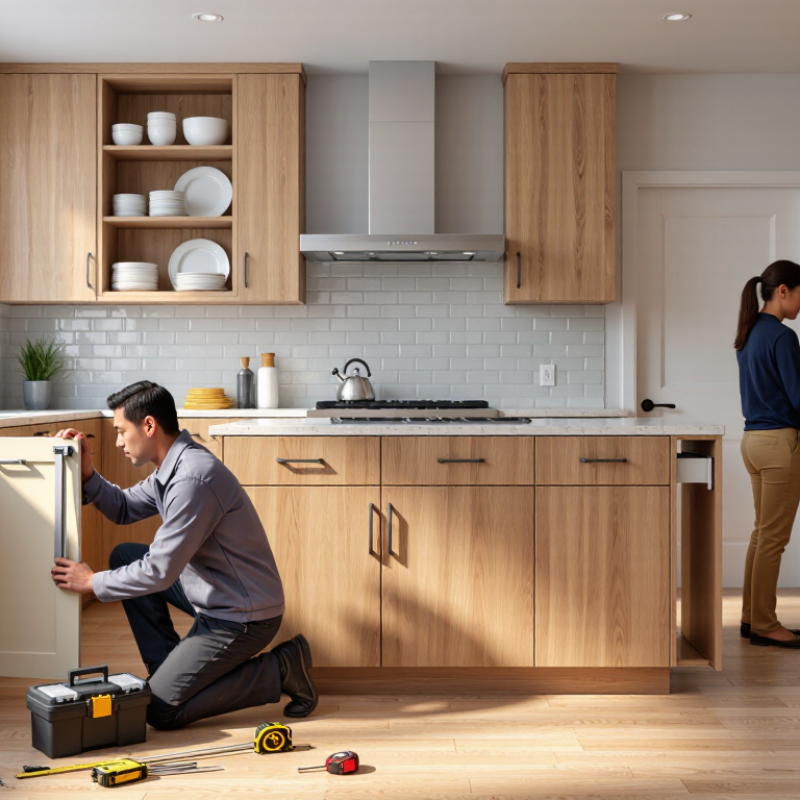
Define Your Cabinet Project and Set Practical Requirements
Before requesting cabinet quotes, write down what the room must do each day. Measure wall lengths, ceiling height, window positions, appliance openings, and the distance doors need to swing. Note what stays and what moves. A phone photo with rough measurements helps, but it is not a substitute for a site check. Specify drawer sizes, pantry storage, preferred door style, finish, hardware, and installation needs. Mark must-haves separately from nice-to-haves. That keeps a beautiful finish from crowding out useful storage.
Set a realistic budget range and timeline, including removal, delivery, installation, and a small allowance for surprises. The 2024 Houzz U.S. Kitchen Trends Study reported a $55,000 median spend for major kitchen remodels completed in 2023. Zonda’s 2024 Cost vs. Value Report estimated $26,790 for a minor kitchen remodel. These figures cover broader work, not a cabinet-only quote, so treat them as context—not a price promise. Ask builders to itemize materials, labor, and exclusions against the same written scope. A first draft may miss something. Recheck it after measuring again, especially around corners, pipes, and uneven floors. I would rather revise a plain checklist now than discover later that the tall pantry blocks a doorway.
Find Local Cabinet Builders Through Trusted Sources
Find Local Cabinet Builders Through Trusted Sources
Start with referrals from neighbors, interior designers, and local building-supply showrooms. Ask who installed the cabinets, not just who supplied them. Then check established trade-association directories and municipal permit records where available. These sources can help confirm local experience, but a listing alone proves little. Ask for two recent client references and photos of finished work. Look closely at door alignment, drawer gaps, and how cabinets meet uneven walls.
Industry data shows why careful hiring matters. Houzz’s 2024 U.S. Kitchen Trends Study reported that 87% of surveyed homeowners hired professionals for kitchen renovations. The National Association of Home Builders’ 2024 Remodeling Market Index remained above 50 in every quarter, indicating more remodelers reported improving conditions than declining ones. Neither figure guarantees craftsmanship.
Ask each builder for proof of insurance, a written scope, material specifications, and a realistic schedule. Compare how clearly they explain site measurements, delivery, and installation—not only the total price. Ask for proof.
One limitation: online reviews can overrepresent very happy or unhappy clients. Call references and ask what changed after the written estimate. Small details count. A vague answer about cleanup or damaged flooring may reveal more than polished photos.
Verify Licenses, Experience, References, and Reviews
Before comparing prices, verify that each cabinet builder holds the credentials required in your area. Licensing rules differ by location, so check directly with the relevant local authority rather than relying on a website badge. Ask for the license number and confirm it is current. Details matter.
Experience should match your project, not just general construction work. Ask how many kitchens or built-ins they have completed, and request photos of similar rooms. Look closely at door alignment, edge finishes, and how cabinets meet uneven walls. A polished portfolio can hide difficult jobs, so ask what went wrong on a past project and how the builder fixed it.
Call at least two recent references. Ask whether the crew arrived when expected, protected floors, and handled changes clearly. A reference may be selective, so compare answers instead of treating one glowing call as proof. Read recent reviews across more than one platform. Look for repeated details about scheduling, cleanup, fit, and follow-up—not only star ratings. One complaint is not a pattern. Several similar complaints deserve questions. Reviews can be incomplete, and even careful checks cannot guarantee a smooth project; get the scope, materials, and payment schedule in writing before work begins.
Compare Detailed Quotes, Materials, Timelines, and Warranties
When comparing local cabinet builders, ask each for an itemized quote based on the same room measurements and cabinet layout. The estimate should separate cabinet boxes, doors, hardware, delivery, removal of old units, and installation. Details matter. Check whether fillers, trim, and adjustments are included; a low total may leave these costs unclear. Ask directly.
Materials affect both appearance and daily wear. Request the exact material for cabinet boxes and doors, plus finish samples you can view in your kitchen’s lighting. Ask how the finish handles moisture and routine cleaning. A builder should explain trade-offs plainly, not just call something “premium.” If an answer feels vague, get it in writing.
Compare timelines by milestone: measurement, design approval, production, delivery, and installation. Confirm what could cause delays, and how schedule changes will be communicated. Then read the warranty closely. Does it cover materials, workmanship, or both? Check its duration, exclusions, and who handles a repair request. A short warranty is not automatically poor, and a long one is not automatically useful. I’d resist choosing on price alone; it’s easy to miss a small exclusion when a quote looks tidy.
How to Compare Local Cabinet Builder Quotes in 2026
The bars count practical details to verify in each quote—not survey results or market statistics.
Compare builders using the same checklist, and ask for any missing details in writing.
- Quote (4): scope of work, labor, exclusions, and payment schedule.
- Materials (4): cabinet material, finish, hardware, and construction method.
- Timeline (3): estimated start, key milestones, and expected completion.
- Warranty (3): what is covered, coverage period, and how to request a remedy.
Assess Communication and Choose the Best-Fit Builder
A reliable cabinet builder should make the conversation feel clear, not rushed. Notice how they respond when you ask about measurements, materials, or installation timing. Do they explain trade-offs in plain language? A careful builder may ask about cooking habits, storage needs, and awkward corners before suggesting a layout. That detail matters.
Listen for specifics. Ask who will measure, build, and install the cabinets, and how changes will be handled. Request a written estimate that separates materials, labor, hardware, and likely extras. Then compare the response, not just the price. A quick reply is useful, but a thoughtful answer is better. So is a clear timeline. If every date sounds certain before the room has been measured, pause and ask what could cause delays.
Choose the person whose working style fits yours. Some homeowners want frequent updates; others prefer a weekly check-in. Say what works for you, and see whether the builder can agree on a simple plan. Ask for references from recent projects, then ask those clients whether questions were answered promptly and problems were explained honestly. No process is flawless. I might still miss a detail, even with notes. Keep decisions in writing, and confirm finish samples under your own kitchen lighting before approving them.