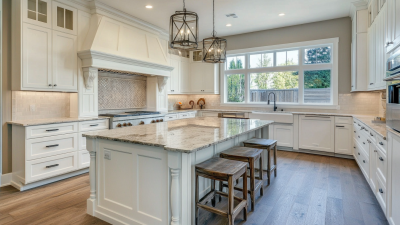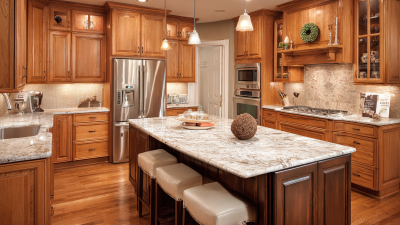

Choosing the right Royal Cabinets supplier in China requires more than comparing catalog prices. It demands evidence, careful questions, and a clear understanding of your project’s risks. Cabinet doors may look identical in photographs, yet their panels, edge sealing, hardware, and finishing methods can differ greatly.
Industry reports support this careful approach. The NKBA 2024 Kitchen Trends Report highlights growing demand for practical storage, durable materials, and efficient kitchen layouts. Houzz’s 2024 U.S. Kitchen Trends Study also shows that homeowners continue investing in upgraded cabinetry and organized storage. These findings matter when evaluating a Royal Cabinets manufacturer. A reliable supplier should explain material grades, moisture resistance, testing procedures, production capacity, and quality-control checkpoints.
Bill Darcy, a former CEO of the National Kitchen & Bath Association, described the kitchen as “the hub of the home.” That idea raises the standard for cabinet sourcing. Your supplier is not merely selling wooden boxes. They are supporting daily use, safety, installation accuracy, and long-term customer satisfaction.
Look for verifiable factory experience. Request recent project photos, physical samples, hardware specifications, and factory-audit documents. Confirm whether the quoted price includes packaging, inspection, replacement parts, and export preparation. Ask how the supplier handles warped panels or color differences. Their answer can reveal more than a polished brochure.
A perfect supplier may not exist. Even experienced buyers can overlook small details. A rushed sample approval, unclear drawings, or weak communication can create expensive problems later. This guide explains how to assess Royal Cabinets suppliers in China with practical standards, documented evidence, and a healthy degree of skepticism.
A reliable cabinet specification begins with the destination market. EN 14749 covers safety requirements and test methods for domestic and kitchen storage units. ANSI A161.1 addresses cabinet construction and performance for kitchen and vanity applications. These standards are not interchangeable. Your supplier should identify the correct standard, edition, and test scope before production.
Write measurable details into the technical file. Include cabinet dimensions, board thickness, edge treatment, hinge cycles, drawer loads, shelf loads, wall anchoring, and moisture resistance. Request drawings with tolerances, not only attractive samples. The Freedonia Group’s Cabinets market analysis identifies remodeling and new residential construction as major demand segments. That competition makes documented quality more valuable than a low quotation. I would not approve a supplier from photographs alone. That assumption can fail.
Tips: Ask for a sample cabinet, material declarations, factory quality records, and independent test reports. Check whether the report matches the exact model. A similar cabinet is not enough. The NKBA 2024 Kitchen Trends Report also highlights storage efficiency and functional planning as continuing priorities. Therefore, inspect drawer clearance, corner access, and daily-use hardware. Small defects become expensive after installation. One missed tolerance can affect an entire kitchen.
Finding a reliable royal cabinets supplier in China requires more than polished showroom photos. Start with HS 9403 trade data. This code covers other furniture, including many cabinet categories. UN Comtrade reported China’s HS 9403 exports at more than US$30 billion in 2023. The figure shows market scale, not supplier quality. That distinction matters.
Use ITC Trade Map to compare China’s export value, yearly growth, and destination markets. Then shortlist factories with consistent shipment records and matching product categories. HS 9403 is broad, so it cannot prove a factory makes royal-style cabinets. Ask for customs declarations, recent packing lists, and product photographs with visible production dates. Small details expose weak claims.
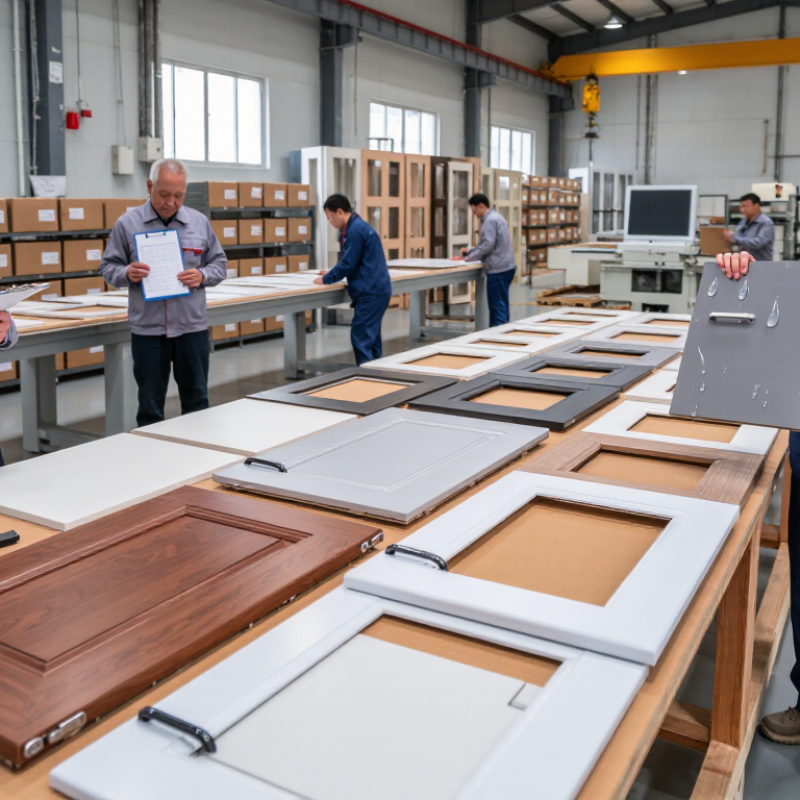
Factory capacity needs physical verification. Request monthly output, workshop area, machine lists, and the number of skilled finishing workers. A credible factory can explain panel cutting, carving, sanding, painting, and final inspection. It should also provide recent inspection records and sample lead times. The China Furniture Association’s industry reports show that production remains highly competitive, but capacity varies sharply between factories. Bigger is not always better. Some factories outsource carving or finishing without saying so. That risk is easy to miss. Arrange a live video tour, check raw material storage, and compare promised output with visible workers and equipment. A perfect answer may still need questioning.
How to Find the Best Royal Cabinets Supplier in China?
A reliable cabinet supplier should prove material origin, not merely display an FSC logo. Request the supplier’s FSC certificate number, certificate scope, product group, and validity date. Verify these details through the official FSC certificate database. Check that the certificate covers the factory and the cabinet components, not only purchased timber. The 2023 FSC Facts and Figures report recorded over 160 million hectares of certified forests worldwide, showing the system’s broad industry reach. Still, certification alone is not enough.
Formaldehyde evidence needs equal attention. Under TSCA Title VI, the 0.09 ppm emission limit applies to particleboard, while other composite panels have different limits. Ask for recent third-party chamber-test reports identifying the exact panel type, thickness, production date, and test method. The U.S. Environmental Protection Agency requires covered composite wood products to meet these emission standards before import or sale. A vague “E0” claim is not a substitute for traceable TSCA documentation.
During a factory audit, inspect sealed panel edges, storage conditions, and batch labels. Compare samples with the test report. Ask who controls production changes. Small details matter. I would not trust a supplier that sends only one old report. Certification can lapse, and paperwork can be incomplete. A careful buyer should verify every shipment’s documents before approving large cabinet orders.
| Verification Area | What to Verify | Factual Requirement or Benchmark | Required Evidence | Recommended Check |
|---|---|---|---|---|
| FSC material claim | Whether the wood-based materials are covered by a valid FSC claim | The FSC claim should match the actual cabinet components, such as doors, panels, shelves, or solid wood parts. | Valid FSC certificate number, certificate scope, product group, and FSC claim shown on transaction documents. | Search the certificate number in the official FSC certificate database and confirm that it is active and applicable to the supplied products. |
| FSC chain of custody | Traceability from certified material to the finished cabinet | A valid chain-of-custody system should identify certified inputs, material handling, production records, and sales documentation. | Material invoices, supplier declarations, production records, batch records, and FSC sales documents. | Match the material description, quantity, batch, and FSC claim across purchasing and delivery records. |
| Panel classification | The type of composite wood used in the cabinet | TSCA Title VI covers hardwood plywood, medium-density fiberboard, thin MDF, and particleboard. | Technical data sheet identifying panel type, thickness, core construction, manufacturer, and production date or lot. | Compare the panel type on the technical documents with the actual core exposed on a sample or production part. |
| Formaldehyde limit: particleboard | Formaldehyde emissions from particleboard components | The TSCA Title VI emission limit for particleboard is 0.09 ppm. | Laboratory test report identifying the panel type, test method, sample identification, result, and applicable regulatory standard. | Confirm that the reported result is at or below 0.09 ppm and that the report applies to the exact panel specification supplied. |
| Formaldehyde limit: hardwood plywood | Formaldehyde emissions from hardwood plywood components | The TSCA Title VI emission limit for hardwood plywood is 0.05 ppm; the 0.09 ppm value does not apply to every panel type. | Panel-specific laboratory report and documentation identifying the hardwood plywood construction. | Reject documents that only state “low formaldehyde” without identifying the applicable TSCA Title VI panel limit. |
| Formaldehyde limit: MDF | Formaldehyde emissions from MDF and thin MDF | TSCA Title VI limits are 0.11 ppm for MDF and 0.13 ppm for thin MDF. | Test report stating whether the product is MDF or thin MDF and showing the applicable emission result. | Verify the panel thickness and classification before comparing the result with the correct limit. |
| Testing method | Whether the emissions test follows the required regulatory procedure | TSCA Title VI compliance testing uses recognized methods based on ASTM E1333 or ASTM D6007, as specified in the regulation. | Complete laboratory report with test method, chamber conditions, sample preparation, test date, and result units. | Check that the report is not merely an internal inspection sheet or an unrelated general air-quality test. |
| Third-party certification | Whether composite wood panels are certified under the TSCA Title VI program | Panels manufactured or imported for covered U.S. products generally require certification by an EPA-recognized third-party certifier, subject to regulatory requirements and exemptions. | Third-party certification statement, certifier identification, panel manufacturer details, and product scope. | Confirm that the certification covers the same panel type, thickness range, production facility, and market destination. |
| Product labeling | Identification of compliant composite wood panels | Covered panels should have compliant labeling or documentation showing the applicable TSCA Title VI certification information. | Photos of panel labels, packaging labels, shipping documents, and batch or lot references. | Check labels before shipment and retain photographs linked to the purchase order and production batch. |
| Factory quality system | Control of incoming materials and production changes | The supplier should control approved materials, adhesive specifications, panel sources, lot traceability, and change management. | Quality manual, incoming inspection records, approved-material list, corrective-action records, and change-notification procedure. | Audit whether the supplier can trace each finished cabinet to the actual panel and coating batches used. |
| Independent pre-shipment inspection | Whether the ordered cabinets match the approved compliance documentation | Inspection should cover dimensions, materials, workmanship, packaging, labels, and document consistency. | Inspection report with sampling plan, photographs, nonconformities, and corrective-action status. | Use a written acceptance checklist and require approval before container loading. |
| Record retention | Availability of compliance records after shipment | Maintain certificates, test reports, invoices, labels, inspection records, and purchase-order references for future traceability. | Organized digital compliance file linked to the supplier, product model, production batch, and shipment. | Require records before final payment and retain them for the period required by the applicable U.S. compliance program. |
Choosing a royal cabinets supplier in China requires more than comparing prices and showroom photos. Begin by auditing the supplier’s ISO 9001:2015 quality system. The ISO Survey 2022 recorded 1,265,216 ISO 9001 certificates across 189 countries and economies. This scale shows the standard’s global relevance, but a certificate alone proves little. Request the certificate scope, issuing body, latest audit date, corrective-action records, and process flow. Then verify whether the system covers cabinet design, panel cutting, finishing, packing, and subcontracted work.
Pre-shipment inspection should follow a written AQL 2.5 plan. Under ANSI/ASQ Z1.4 sampling practice, inspectors select samples according to lot size and inspection level. AQL 2.5 is an acceptance parameter, not a promise that 2.5% of units will be defective. Define critical, major, and minor defects separately. For cabinets, critical issues may include unstable structures or unsafe hardware. Major defects include warped doors, poor alignment, or visible color differences. Minor defects can involve small surface marks.
Use calibrated tools, approved golden samples, moisture checks, and carton-drop tests. Record measurements with photographs. Keep one sealed sample from production. It helps during disputes. Still, factory paperwork can look perfect while production varies. That is the uncomfortable part. Audit real batches, not only procedures. The International Trade Centre’s SME Competitiveness Outlook repeatedly identifies quality compliance and buyer trust as important barriers in international sourcing. A careful audit, independent inspection, and traceable records reduce those risks, although they cannot remove them entirely.
ISO 9001 Audit and AQL 2.5 Pre-Shipment Sampling Reference
The chart shows the required sample size for AQL 2.5 inspections under General Inspection Level II, based on ISO 2859-1 and ANSI/ASQ Z1.4 lot-size sampling principles. AQL 2.5 is a sampling standard, not a guarantee that 2.5% of products may be defective. Supplier approval should also verify ISO 9001:2015 controls, traceability, corrective actions, inspection records, and production consistency.
China’s furniture exports exceeded $73 billion in 2023, according to China Customs data cited in industry trade reports. This scale creates choice, but also noise. A polished catalog does not prove factory capability. I would request recent production photos, material specifications, edge-banding details, and a video inspection of the workshop. Ask whether the quoted cabinet uses plywood, MDF, or solid wood. These materials can change durability and cost sharply.
Compare quotes on one detailed specification sheet. Include cabinet dimensions, hardware, finish, packaging, spare parts, and inspection standards. An EXW quote may look cheaper, but it excludes inland transport and export handling. FOB includes delivery to the loading port. CIF includes freight and insurance to the destination port, but usually excludes import duties and local delivery. The lowest number is often incomplete.
Lead time needs written milestones. A practical schedule may separate sample approval, material purchasing, production, inspection, and loading. Industry logistics reports often show that port congestion and holiday shutdowns can disrupt planned dates. Add a small buffer. Not glamorous, but useful. China’s furniture export volume also means suppliers may prioritize larger orders during busy seasons. Request a production calendar and a penalty or remedy clause, where legally appropriate. I still see buyers compare price first and documentation later. That order creates expensive surprises. Independent inspection before shipment, clear payment stages, and verified export records make the decision more reliable.