

7 Tips for Buying Bakery Paper Bags in Bulk

Buying Bakery Paper Bags in bulk is not just a price decision. The right order should protect pastries, fit your products, and arrive when your shelves need restocking. A warm croissant can leave grease marks; a tall cake slice may strain a short bag. Small details matter.

Packaging educator Walter Soroka is a relevant voice on packaging decisions. I can’t verify an exact statement from him about buying bakery bags in bulk, so I won’t invent a quotation or place words in his mouth. His packaging expertise is a useful reminder to evaluate the package against the product and its handling needs. That sounds simple. It is easy to overlook when a low unit price takes center stage.

This guide’s seven tips will help you compare paper quality, bag dimensions, handle strength, printing options, minimum order quantities, and supplier consistency. Check samples with real items from your counter: a flaky pastry, a boxed muffin, or a loaf with a crisp crust. Then ask how the bags perform during busy service and storage. A bulk order can save money, but only when the bags suit your daily workflow. I would still test a sample before committing; specifications rarely tell the whole story.
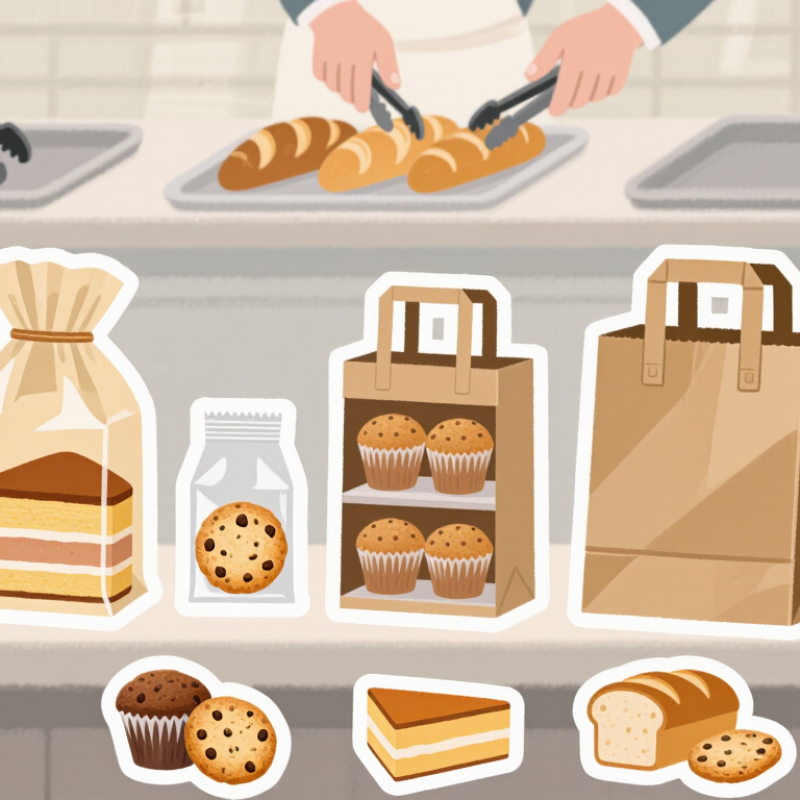
7 Tips for Buying Bakery Paper Bags in Bulk

Define Your Bakery’s Packaging Needs and Bag Specifications

Before requesting bulk quotes, record what each bag must carry: a single croissant, a boxed cake, or several warm loaves. Measure the product, then allow room for easy loading without crushing flaky edges. Specify bag width, height, gusset, paper weight, handle style, and any window. Fit matters. A bag for a greasy cinnamon roll may need a suitable grease-resistant lining; a loaf bag may need breathability to limit trapped moisture. Ask suppliers for samples and test them with real products, not empty bags.

A Two Sides 2023 Trend Tracker survey found that 55% of consumers prefer paper or cardboard packaging. That preference can support a paper-bag choice, but it does not prove every paper bag suits every bakery. Check food-contact suitability and ask how the bag performs with heat, oil, and your normal filling process. Estimate weekly use by size, then include seasonal peaks before setting the order quantity. A bulk discount looks appealing. Still, oversized cartons can occupy valuable storage and leave slow-moving sizes unused. Trial a modest mixed-size order first, and note which bags tear, stain, or feel awkward at the counter. Those small observations are useful, even if the first estimate needs revising.

Compare Paper Types, Sizes, Handles, and Food-Safety Features

Buying bakery paper bags in bulk starts with the food itself. Brown kraft suits many dry pastries, while grease-resistant paper can help contain buttery croissants. Ask for the paper’s weight, recycled-fiber content, and coating details. The US EPA’s 2018 materials report estimated that 79.5% of paper and paperboard containers and packaging were recycled. That broad figure is useful context, but it does not guarantee that a particular bag is recyclable locally or safe for direct food contact.

Measure the largest item, not the average one. Leave room for easy packing, but avoid oversized bags that let small cookies slide around. Choose flat handles for light purchases and stronger twisted-paper handles for heavier boxes. Test samples with a realistic load. Include warm pastries. A dry sample alone can hide weak seams or grease marks. Even careful buyers miss this.

For food safety, request documentation for the exact bag construction, including inks, coatings, and intended food uses. Check suitability for greasy foods and the temperatures your bakery actually serves. Confirm requirements with the relevant local authority. “Food grade” on a sales sheet is not enough detail. One awkward truth: a bulk discount can make the wrong size mistake more expensive. Get samples and written specifications before placing a large order.

Typical Paper Weight by Bakery Bag Style

These indicative ranges are common starting points, not fixed standards; specifications vary by supplier and bag construction. Choose the size and handle style for the product and packing method. For food contact, verify the supplier’s documentation and suitability for the intended food and conditions—paper weight alone does not establish food safety.

Evaluate Suppliers, Customization Options, and Minimum Order Quantities

7 Tips for Buying Bakery Paper Bags in Bulk

Tip: Evaluate suppliers with practical questions, not just a low quote. Ask for paper weight, bag dimensions, handle strength, and details about grease resistance. Request relevant food-contact documentation for your intended use. A responsive supplier should explain specifications clearly and send a physical sample. Check the seams and fold the bag with a pastry inside. Small details matter.

Tip: Confirm customization options before approving artwork. Ask about print colors, logo placement, ink coverage, and whether the design changes the price or production time. Compare a printed sample with your actual packaging; colors can look different on kraft paper. I would not assume a digital proof shows the final result. It often doesn’t.

Tip: Clarify minimum order quantities and how prices change at different volumes. A low unit price may require more bags than your storage space can handle. Ask about lead times, reorder quantities, and fees for custom plates or setup. Keep a few extra samples for staff testing. You may discover the opening is awkward when filling bags quickly. Better to catch that early.

7 Tips for Buying Bakery Paper Bags in Bulk - Evaluate Suppliers, Customization Options, and Minimum Order Quantities

Tip What to Evaluate Questions to Ask Suppliers Bulk-Buying Check
1. Match the bag to the product Check the bag’s dimensions, paper weight, opening, and construction against the bakery items it will hold. Greasy or moist products may require a suitable grease-resistant format. Which bag sizes and paper options suit my products? Is the bag designed for direct food contact or for secondary packaging? Test samples with actual products before ordering. Check fit, loading, carrying, and whether grease or moisture affects the bag.
2. Verify food-contact information Requirements depend on the destination market and how the packaging will be used. Ask for applicable declarations, specifications, or test documentation. What documentation can you provide for the intended food-contact use and sales market? Keep the documentation with the product specification and confirm that it covers the exact bag material, coating, and intended use.
3. Compare suppliers consistently Assess product specifications, sample quality, production lead time, communication, shipping terms, and the process for handling defects. Can you provide a written specification, sample, production timeline, and quality-claim procedure? Request comparable quotes for the same size, paper, print, quantity, and delivery destination. Check whether freight and setup charges are included.
4. Confirm customization options Options may include bag size, paper color, print colors, artwork placement, handles, and compatible coatings. Availability depends on the bag style and production method. Which options are available for this bag, and are there artwork, plate, or setup charges? Approve a final proof that shows artwork placement, colors, and dimensions before production. Confirm whether repeat orders require new setup fees.
5. Check the minimum order quantity Minimum order quantities (MOQs) vary by supplier, bag format, stock availability, and customization. Printed or specially made bags may have different MOQs from unprinted stock bags. What is the MOQ for each version, and can different sizes or designs be combined to meet it? Compare the MOQ with expected usage and available storage. Ask whether the quoted quantity is per size, design, or total order.
6. Calculate the full delivered cost Unit price alone may exclude printing setup, tooling, freight, duties, taxes, or other charges. Packaging and delivery terms can affect the landed cost. What is included in the quote, what charges are additional, and where does responsibility for shipping and import costs begin? Compare total quoted cost per usable bag, including applicable fees and delivery, rather than comparing unit prices alone.
7. Plan replenishment and storage Lead times and reorder schedules can vary. Paper bags should be stored clean and dry, away from moisture, odors, and direct contact with contaminants. What are the current production and shipping lead times? Can you confirm stock availability or provide reorder guidance? Estimate usage from actual sales, allow for delivery time, and choose an order quantity that fits both storage space and cash-flow needs.

Note: Specifications, MOQs, documentation, and lead times vary by supplier, bag construction, customization, and destination market. Confirm all details in the written quotation and approved product specification.

Calculate Bulk Costs, Storage Needs, and Reorder Timing

When comparing bakery paper bag quotes, calculate landed cost per usable bag, not just the unit price. Include setup fees, freight, receiving charges, and an allowance for damaged cartons, then divide by the usable quantity. The 2024 CSCMP State of Logistics Report estimated U.S. business logistics costs at $2.3 trillion in 2023, or 8.7% of GDP. Freight deserves a clear line in your calculation. A cheap quote can look less attractive after delivery.

Tip: Measure the cartons before ordering. Estimate their floor space from pallet dimensions, then check whether your storage area can keep them dry and away from ovens, sinks, and greasy prep zones. Leave room for staff to move cartons safely. Compare the storage cost of one large shipment with the cost of smaller, more frequent orders. That trade-off depends on your space and cash flow; a forecast is still a guess.

Tip: Set a reorder point using average weekly use × supplier lead-time weeks, plus safety stock. For example, if you use 400 bags weekly and delivery takes three weeks, your baseline is 1,200 bags before adding a buffer. Track actual use and delivery dates for several orders, then adjust. Seasonal pastry demand can shift quickly. Recheck the number after menu changes, too.

Check Samples and Quality Before Placing a Large Order

Before placing a large order, request samples from the same paper grade, size, and finish you plan to buy. A sample made from a different material may not represent the final batch. Check the bag under normal bakery conditions, not just on a desk.

Fit a croissant, a loaf, or your usual pastry inside. Look for enough room at the top to fold the bag without crushing the product. Lift it by the handles, if included, and inspect the seams and bottom corners for weak spots. Small flaws matter. Rub the inside with a clean, dry hand to check for loose fibers, and notice any unusual odor or ink transfer. Ask the supplier for documentation on food-contact suitability and paper specifications.

Try several samples, not only one. Compare thickness, stiffness, and how easily each bag opens when staff are busy. If you sell warm items, test a cooled product first; trapped steam can soften paper and make results misleading. That detail is easy to overlook. Record what you tested, including product weight and storage time, then share clear feedback with the supplier. Samples cannot guarantee every production run will match, but they can reveal problems before you commit to a large quantity. Don’t skip this step.

Article Source: