
10 Tips for Choosing Office Custom Cabinets?

Choosing Office Custom Cabinets is no longer only a question of matching wood finishes. It affects storage, privacy, movement, and daily concentration. Gensler’s 2024 Global Workplace Survey reports that employees value workplace choice and effective settings for different tasks. That finding matters. A tall cabinet may hide clutter, yet it can also block daylight or reduce team visibility.

BIFMA industry guidance emphasizes durability, safety, performance testing, and responsible product selection. These details shape a practical cabinet system. Look closely at drawer cycles, load ratings, edge protection, hardware quality, and formaldehyde emissions. A beautiful veneer cannot repair a weak hinge. Sometimes, the cheapest quote becomes the most expensive decision.

Chris Congdon, Steelcase’s Global Director of Research and Insights, has stated, “The office is a tool for connection, collaboration, and belonging.” Her observation supports a wider design lesson: cabinets should serve people, not simply fill walls. Storage can create clear walkways, quieter focus zones, and cleaner shared tables. It can also make a small office feel crowded when measurements are rushed.

This guide, “10 Tips for Choosing Office Custom Cabinets,” examines those decisions through workplace research, manufacturing standards, and practical experience. It considers layout, materials, accessibility, cable management, security, maintenance, and future flexibility. The process is not perfect. Teams change, technology changes, and original assumptions may fail. Measure twice. Question the brief. Then choose cabinetry that remains useful after the showroom impression fades.
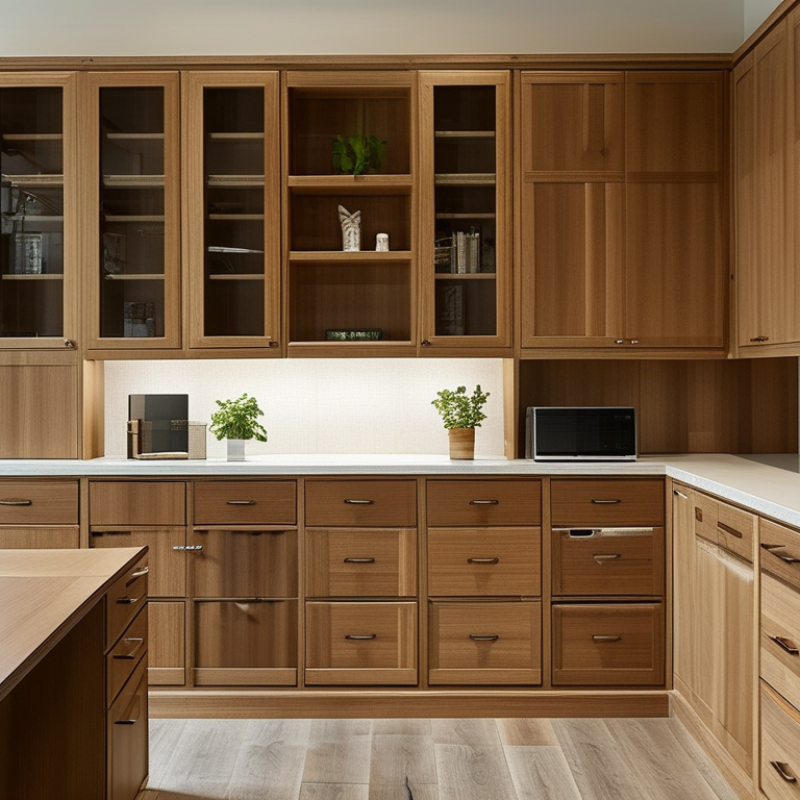
10 Tips for Choosing Office Custom Cabinets?

Assess Office Storage Needs and Daily Workflow

Assessing office storage begins with observing work, not measuring walls.

For two or three days, record what employees retrieve, share, archive, and discard. Note peak periods, walking distances, and repeated interruptions.

A finance team may need secure drawers near desks, while a design team needs wide shelves for samples.

Ask staff where they lose time. Their answers often challenge management assumptions.

Create a simple inventory by category, frequency, size, and access level.

Keep daily-use files between waist and eye height.

Place weekly materials in nearby cabinets.

Store inactive records farther away, but label them clearly.

Allow space for growth; a cabinet filled to 95 percent becomes difficult to use. Leave room for cables, bags, and cleaning supplies. These details are easy to miss.

Workflow should guide cabinet placement.

A shared printer, meeting table, and filing zone can form a practical triangle, reducing unnecessary trips.

Lockable compartments may suit confidential documents, while open shelves can support active collaboration.

In one office review, we moved supplies only six meters and reduced repeated desk visits noticeably. The layout looked efficient on paper. It was not.

Employees still avoided one cabinet because its doors blocked a passage.

Test cabinet locations with temporary tape before installation. Watch people work during a busy hour, then revise the plan.

Good storage quietly removes friction from daily decisions.

Measure the Space and Plan Cabinet Placement

10 Tips for Choosing Office Custom Cabinets

Measure the Space and Plan Cabinet Placement

Accurate measurements are the foundation of useful office cabinetry. Measure wall width, ceiling height, door swings, windows, outlets, and floor vents. Record each dimension twice. My first sketch missed a deep windowsill, and the cabinet plan had to change. Small oversights become expensive problems.

Leave practical clearance around every cabinet. A desk usually needs comfortable legroom, while drawers require enough space to open fully. Keep walkways clear, especially near entrances and shared work areas. Mark cabinet outlines on the floor with painter’s tape. This simple test reveals awkward corners before installation begins.

Think about daily movement, not only appearance. Place frequently used files near the main workstation. Store heavier equipment in lower compartments for safer access. Adjustable shelves can handle changing office needs, but they should not carry more weight than their hardware allows. Confirm wall conditions before selecting tall units, because uneven surfaces may require fillers or professional adjustment.

Use a scaled drawing with outlet locations and cable routes. Plan openings for monitors, chargers, and printers before the cabinet material is ordered. A qualified installer can verify structural support, ventilation, and local safety requirements. Still, review the plan yourself. You understand the room’s habits better than anyone. One detail may remain imperfect, but identifying it early is far better than discovering it after installation.

Choose Durable Materials, Finishes, and Hardware

Office custom cabinets must survive daily use, cleaning, and occasional careless impacts. Material selection matters more than decorative trends.

Tip 1: Choose moisture-resistant plywood for sink areas.
Tip 2: Specify high-pressure laminate for busy doors and worktops.
Tip 3: Use powder-coated steel where carts may strike cabinet edges.
Tip 4: Inspect panel thickness, edge sealing, and fastener quality before approval. A beautiful sample can still hide weak construction.

EPA guidance notes that indoor pollutant levels can be two to five times higher than outdoors. Tip 5: Request low-emitting adhesives, coatings, and composite panels. Tip 6: Prefer finishes that clean with mild detergent, not harsh chemicals. Tip 7: Choose satin textures for fingerprints and small scratches. Gloss looks impressive, but it is less forgiving. Tip 8: Ask for documented emissions testing, recycled content, and product transparency. These details support responsible purchasing, although paperwork alone does not prove long service life.

Tip 9: Select hinges and drawer slides rated for commercial cycles, with soft-close adjustment. Tip 10: Use replaceable handles and accessible screws, so maintenance does not require dismantling the cabinet. The 2023 Global E-waste Monitor reported 62 million metric tonnes of electronic waste in 2022. Office hardware is not electronic waste, but the lesson still applies: repairable components reduce premature replacement. I still see projects choosing attractive hardware without testing it under real use. That is an avoidable mistake. Rub sample finishes with a damp cloth, open drawers repeatedly, and check alignment after installation. Future users may be less careful than the design team.

Prioritize Ergonomics, Security, and Cable Management

Choosing Office Custom Cabinets: Prioritize Ergonomics, Security, and Cable Management

Custom cabinets should fit the people using them, not merely the walls around them. In a real office, shoulder strain often comes from reaching for files stored too high. Keep daily materials between waist and eye level, and reserve upper shelves for lighter items. Adjustable shelves support different tasks and reduce awkward bending. A sit-stand workstation also needs clearance for knees, feet, and chair movement. Measure these zones with occupied furniture, not an empty floor plan. Small errors become daily discomfort.

Protect confidential records with lockable compartments, controlled key access, and solid hinges. Digital equipment needs ventilation, while paper files need protection from moisture and accidental access. Avoid storing heavy equipment above head height. That choice feels efficient until maintenance becomes risky. Plan cable routes before cabinet fabrication. Use rear channels, removable panels, and generous openings near outlets. Separate power cables from data lines where practical, and label both ends. Leave spare capacity for future devices. Crowded wiring is difficult to inspect and easy to disturb. Test every door, drawer, and cable path at seated and standing heights. Ask staff to trial the layout for a week. Their feedback may expose a blind spot in the original design. Good planning is rarely perfect. It improves through careful observation.

10 Tips for Choosing Office Custom Cabinets? - Prioritize Ergonomics, Security, and Cable Management

No. Selection Tip Why It Matters Recommended Specification Practical Check
1 Set Work Surfaces at a Comfortable Height A suitable desk height helps keep the elbows near the body and reduces shoulder and wrist strain. Choose a height-adjustable work surface where possible. For fixed desks, allow the user’s feet to rest flat and the elbows to remain close to a 90-degree angle while typing. Test the cabinet or desk with the actual chair, keyboard, and monitor before finalizing the design.
2 Place Frequently Used Items Within Easy Reach Repeated bending, twisting, or reaching can increase fatigue and reduce productivity. Position daily-use files, stationery, and peripherals between approximately hip and shoulder level; reserve high or low storage for infrequently used items. Map storage according to task frequency before deciding shelf and drawer locations.
3 Design for Clear Legroom Pedestal units or partitions that obstruct the knees can force awkward sitting positions. Keep the primary seated position free from drawer boxes, support panels, and sharp corners; provide enough depth for natural leg movement. Sit at the workstation and check knee clearance, foot movement, and chair adjustment range.
4 Plan Dedicated Cable Management Organized cables reduce trip hazards, simplify maintenance, and keep the work surface uncluttered. Include rear cable channels, grommet openings, accessible power locations, and separate routes for power and data cables where practical. Confirm cable-entry points for monitors, docking stations, network equipment, and future devices.
5 Separate Sensitive Documents Confidential records should not be mixed with general office supplies or left in open shelving. Use lockable drawers or cabinets for personnel files, financial records, contracts, and other restricted documents. Define access groups and verify who needs keys, codes, or other authorized access.
6 Use Stable, Tip-Resistant Storage Tall or heavily loaded cabinets can become hazardous if they tip or if several drawers are opened at once. Specify anti-tip mechanisms, secure anchoring where required, levelers, and load ratings appropriate to the intended contents. Ask for installation instructions and confirm that the cabinet can be fixed safely to the building structure.
7 Choose Durable and Low-Emission Materials Office cabinets experience frequent contact, while material emissions can affect indoor comfort and air quality. Select surfaces resistant to everyday wear and request documented information about formaldehyde and volatile organic compound emissions. Review material documentation, edge quality, hardware strength, and cleaning requirements before approval.
8 Improve Lighting and Visual Comfort Poorly positioned storage can block daylight or create reflections and shadows around the workstation. Keep tall units away from primary light paths when possible and use open shelves or task lighting where they improve visibility without glare. Review the layout at different times of day and check for shadows on documents and screens.
9 Include Accessibility Features Storage should be usable by people with different heights, mobility needs, and reach capabilities. Provide reachable shelves, easy-grip handles, smooth drawer action, clear circulation paths, and adequate turning space where needed. Review the design against applicable accessibility requirements and test it with representative users.
10 Allow for Future Changes Technology, staffing levels, and document volumes often change during the life of an office fit-out. Use modular components, adjustable shelves, spare cable capacity, removable panels, and layouts that can be reconfigured. Estimate future equipment and storage needs instead of designing only for the current setup.

Note: Final dimensions, anchoring methods, accessibility provisions, fire requirements, and electrical work should be checked against local building regulations and workplace safety standards.

Compare Costs, Suppliers, Installation, and Future Flexibility

Choosing office custom cabinets starts with a realistic cost comparison. Request itemized quotes for panels, hardware, delivery, installation, and tax. A low price may exclude wall preparation or final adjustments. Ask about material thickness, edge protection, drawer ratings, and finish durability. These details affect daily performance more than showroom appearance.

Supplier reliability deserves careful checking. Review recent commercial projects and request references from similar offices. Confirm production schedules, installation training, insurance, warranty terms, and change-order procedures. I once accepted a tempting quote without checking delivery access. The cabinets arrived, but the loading route delayed installation. That mistake changed how I evaluate suppliers. Written measurements and responsibilities prevent expensive misunderstandings.

Installation quality can determine whether custom cabinets feel truly custom. Require a site visit before fabrication, especially around uneven floors, outlets, windows, and existing workstations. Confirm who handles drilling, leveling, debris removal, and damage repairs. Leave service access for power and data cables. Plan for future flexibility, too. Adjustable shelves, replaceable panels, movable storage modules, and neutral finishes can support office growth. Avoid designing every compartment for today’s equipment. Technology changes quickly. Still, excessive flexibility can waste space and raise costs. I prefer a practical middle ground, though it is not always the most attractive option. A small contingency budget helps when real walls disagree with drawings.

Office Custom Cabinet Planning: Cost, Installation, and Future Flexibility

Typical planning ranges for custom office cabinets in the U.S., shown as estimated cost per linear foot. Compare material choice, hardware, fabrication, and installation before selecting a supplier.

Use these ranges as an early budgeting reference. Final pricing depends on cabinet dimensions, finish quality, accessories, site conditions, delivery distance, installation requirements, and the supplier’s warranty and modification policy.