
China Top 10 Traditional Cabinet Suppliers for Global Buyers

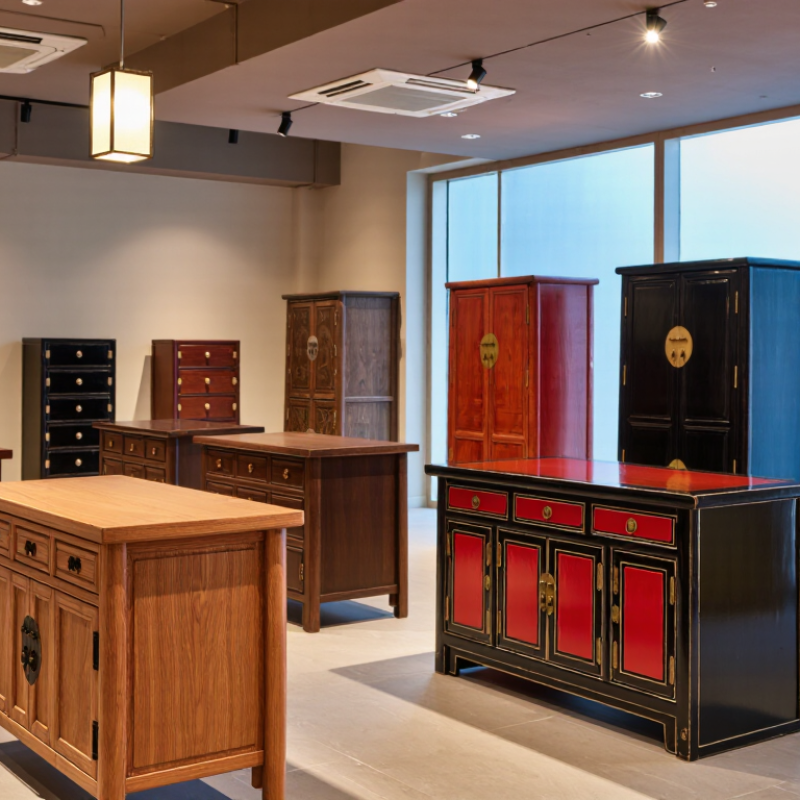
China has become a major sourcing destination for Traditional Cabinets, serving homes, hotels, restaurants, and cultural projects worldwide. Its manufacturers combine established woodworking techniques with modern production systems. Buyers can find solid wood cabinets, lacquered storage units, altar cabinets, and adaptable designs for contemporary interiors.

This guide examines ten Chinese suppliers that attract global buyers. It considers product quality, material selection, workshop capability, customization, export experience, and communication standards. A reliable supplier should explain wood species, moisture control, surface treatments, hardware, packaging, and lead times clearly. Factory photographs help, but they are not enough. Samples matter more.

Details reveal competence.

Some suppliers may present impressive catalogs while offering limited evidence of consistent production. That difference deserves attention. Buyers should request recent project references, inspection records, material certificates, and a sample before placing a substantial order. Costs also require careful comparison, because low prices can reflect thinner panels, weaker joints, or simplified finishing. However, higher prices do not automatically guarantee better craftsmanship.

The selected companies are presented as practical starting points, not unquestionable recommendations. Supplier rankings can change with capacity, management, customer service, and market conditions. International buyers should verify current certifications, shipping arrangements, payment terms, and after-sales responsibilities independently. Measurements should be confirmed twice, especially for built-in cabinets and irregular spaces. A cabinet that looks elegant online may not fit a real wall.

Good sourcing takes patience.

With a balanced review and direct supplier communication, buyers can identify Traditional Cabinets that match their design goals, budget, and long-term performance expectations. The process is not flawless, but careful questions reduce avoidable surprises.
China Top 10 Traditional Cabinet Suppliers for Global Buyers

Traditional Cabinet Manufacturing in China: An Industry Overview

China’s traditional cabinet sector combines hand-finishing with increasingly standardized factory production. Solid wood, natural veneer, mortise-and-tenon details, and low-VOC coatings remain common requirements for residential and hospitality projects. Craft still matters. Skilled workers inspect timber grain, adjust door gaps, and repair small surface defects before packing.

The China National Furniture Association reported that China’s furniture industry generated approximately RMB 655.7 billion in 2023, with revenue declining 5.9% year on year. This figure covers the broader furniture sector, but it shows the pressure cabinet manufacturers face. Buyers now expect flexible customization, stable lead times, and clearer quality records. The 2024 China Furniture Industry Development Report also highlighted digital production, environmental control, and supply-chain efficiency as major development themes.

Many factories use CNC cutting for repeatable dimensions while retaining manual sanding and finishing. A practical audit should examine moisture testing, panel flatness, edge sealing, hardware installation, and packaging strength. Ask for process photographs and recent inspection records. Do not trust a polished showroom alone. It can hide weak back panels or inconsistent internal finishes.

Traditional cabinet manufacturing still has limitations. Small workshops may offer excellent carving but struggle with batch consistency. Large plants may deliver precision but reduce genuine handwork. Global buyers should compare samples, production capacity, material certificates, and corrective-action records before selecting suppliers. The best choice depends on the project, not only the quotation.

How to Evaluate Chinese Cabinet Suppliers for Global Purchasing

China Top 10 Traditional Cabinet Suppliers for Global Buyers

How to Evaluate Chinese Cabinet Suppliers for Global Purchasing

China remains a major furniture manufacturing hub. CSIL’s World Furniture Outlook 2024 estimates China produces about 40% of global furniture output. China Customs data also placed furniture exports above US$70 billion in 2023. These figures show capacity, not automatic reliability. A serious buyer should verify factory capability, material control, and export experience before comparing prices.

Request the supplier’s business license, factory address, production photographs, and recent inspection records. Check whether the workshop actually performs cutting, edging, assembly, and finishing. Ask for panel density, formaldehyde test results, hardware specifications, and moisture resistance data. Independent testing should follow recognized standards, such as EN, ASTM, or applicable national requirements. I have learned that a polished showroom can still hide weak quality controls. That assumption is risky.

Tips: Compare three suppliers using the same cabinet drawings and bill of materials. Require a pre-production sample, then inspect color, edge bonding, hinge alignment, and packaging strength. Use a written tolerance sheet. Include carton labels, spare parts, delivery terms, and corrective-action deadlines. Review payment stages carefully, and avoid choosing solely by the lowest quotation. UN Comtrade data can help compare China’s export patterns under relevant furniture categories, but trade statistics cannot confirm one factory’s performance. Video calls help, yet an independent pre-shipment inspection remains more dependable. Suppliers may also overstate monthly capacity, so request production schedules and anonymized shipment evidence.

China Top 10 Traditional Cabinet Suppliers for Global Buyers - How to Evaluate Chinese Cabinet Suppliers for Global Purchasing

No. Evaluation Dimension What Global Buyers Should Verify Recognized Reference or Requirement Practical Acceptance Benchmark Suggested Weight
1 Manufacturing Experience Confirm the factory’s operating history, production scope, export markets, annual capacity, and experience with traditional solid-wood or wood-based cabinet construction. Business license, factory audit report, production records, export documentation, and customer references. A documented operating history of at least 5 years, stable production capacity, and verifiable references for similar cabinet projects. 12%
2 Material and Timber Legality Check the species, origin, moisture content, grading method, solid-wood content, veneer composition, and legality of timber sourcing. Applicable import laws, due-diligence requirements, legal-harvest documentation, and chain-of-custody records where claimed. Complete species and origin declarations, consistent moisture-control records, and traceable documentation for every major timber component. 12%
3 Panel and Formaldehyde Compliance Identify the core panel type and verify emissions test results for plywood, MDF, particleboard, and veneered components used in the cabinet. CARB Phase 2 and TSCA Title VI requirements for relevant composite wood products; EN 717-1 may apply in European projects. Current third-party laboratory reports matching the actual panel supplier, thickness, product type, and production batch. 12%
4 Construction and Joinery Quality Evaluate mortise-and-tenon, dowel, dovetail, screw, glue, and concealed-joint construction, together with dimensional consistency. Approved technical drawings, product specifications, internal inspection standards, and agreed tolerances. Documented joint specifications, stable fit during repeated assembly, no visible gaps, and tolerance limits agreed before mass production. 12%
5 Surface Finishing Performance Review coating type, color consistency, sheen, stain resistance, adhesion, curing controls, and repair procedures for traditional finishes. Project-specific coating specifications and applicable ASTM or ISO test methods agreed in the quality plan. Approved color sample, controlled coating process, uniform appearance under normal lighting, and passing results for agreed adhesion and durability tests. 10%
6 Hardware and Functional Testing Verify hinge, runner, handle, lock, soft-close, load-bearing, opening-cycle, and corrosion-resistance requirements. Applicable furniture hardware specifications, project drawings, and agreed cycle or load tests. Hardware must match approved samples, operate smoothly, carry the specified load, and pass the agreed cycle test without functional failure. 10%
7 Quality Management System Assess incoming-material inspection, in-process checks, final inspection, nonconformity handling, corrective actions, and record retention. ISO 9001 certification may support evaluation but does not replace product-specific inspection. Written inspection procedures, batch traceability, measurable acceptance criteria, and corrective-action records available for review. 10%
8 Customization and Engineering Support Confirm the supplier’s ability to produce shop drawings, samples, room layouts, special dimensions, installation details, and revision-controlled specifications. Approved drawings, bill of materials, sample sign-off process, and engineering change-control procedure. A complete pre-production sample and drawing approval process with documented revision control before bulk manufacturing. 8%
9 Lead Time and Export Capability Review sampling time, production schedule, packing method, container utilization, export experience, documentation, and delivery-risk controls. Purchase contract, agreed Incoterms, packing list, commercial invoice, inspection plan, and shipment schedule. A written milestone schedule, pre-shipment inspection, moisture-protected packaging, and delivery performance tracked against the contract. 7%
10 Commercial Terms and After-Sales Support Compare quotation clarity, tooling or sampling charges, payment terms, warranty coverage, spare parts, claims handling, and replacement procedures. Signed quotation, purchase contract, warranty terms, claims procedure, and agreed service-level commitments. Transparent cost breakdown, written warranty terms, defined response times, and a documented process for defective or damaged goods. 7%
Total Suggested Evaluation Weight 100%

Note: The benchmarks above are buyer-side evaluation criteria rather than rankings or performance claims about any specific supplier.

China’s Top 10 Traditional Cabinet Suppliers and Their Strengths

China Top 10 Traditional Cabinet Suppliers for Global Buyers

China’s top ten traditional cabinet suppliers show different strengths, not identical production models. CSIL’s World Furniture Outlook 2024 estimates that China produced about 37% of global furniture output in 2022. This scale supports competitive sourcing, but cabinet quality still depends on workshop discipline.

Several suppliers focus on solid wood frames, mortise-and-tenon joints, and hand-applied lacquer. Others combine CNC cutting with manual carving, improving repeatability for export orders. Some factories offer customized dimensions, moisture-resistant panels, and reinforced packaging for long-distance shipping. Their strongest advantage is flexibility. Smaller batches are often possible. That matters for hospitality projects and regional retailers.

Export-oriented suppliers usually provide material samples, inspection records, and installation drawings. These documents help buyers compare oak, ash, walnut, and engineered boards more accurately. The China Furniture and Decoration Chamber reports that customization and digital manufacturing remain important industry trends. Still, traditional appearance does not guarantee traditional construction. A cabinet may look aged while using thin panels or weak hardware. Buyers should check panel thickness, joint photos, finish samples, and carton test results.

Lead times can also change during peak seasons. This is an overlooked risk. A factory may promise excellent carving, yet lack stable finishing capacity. The most reliable suppliers combine experienced craftsmen with documented quality control, clear tolerances, and transparent replacement policies. Human inspection remains necessary. Automated checks cannot judge every lacquer shade or hand-carved detail.

Materials, Craftsmanship, Customization, and Quality Standards

Choosing among China’s top traditional cabinet suppliers requires more than comparing photographs and prices. Materials reveal long-term value. The FAO Forestry Production and Trade database recorded roughly 374 million cubic metres of wood-based panels worldwide in 2022. Buyers should therefore verify panel density, moisture resistance, veneer thickness, and formaldehyde documentation, rather than accepting “solid wood” as a complete specification.

Details matter. Experienced workshops use controlled kiln drying, tight mortise-and-tenon joints, aligned grain, and hand-finished edges. Ask for moisture readings before packing. A cabinet may look beautiful while hiding uneven drying or weak internal supports.

That risk is easy to miss. CSIL’s World Furniture Outlook reports that global furniture consumption remains above 1 trillion US dollars, increasing pressure for reliable, repeatable production. Customization should include measured drawings, hardware schedules, finish samples, and tolerance limits. Test it twice.

Quality checks should follow recognized methods, including ISO 7170 for storage-unit strength and durability where applicable. Export buyers should also request factory inspection records, batch photographs, packaging tests, and independent laboratory results. These documents support traceability, but they are not perfect proof. Real performance can change with climate, installation, and daily use. A dependable supplier explains those limits clearly and corrects specification gaps before production begins.

International Ordering, Pricing, Shipping, and Supplier Verification

China Top 10 Traditional Cabinet Suppliers for Global Buyers

International cabinet ordering should begin with a landed-cost sheet, not a catalog price. Ask suppliers to separate timber, hardware, finishing, packaging, inspection, inland transport, and freight charges. Compare the same specifications, including dimensions, moisture content, joinery, and finish thickness. The WTO reported a 1.2% decline in global merchandise trade volume in 2023, so suppliers may quote more cautiously. Confirm quote validity and currency exposure before paying a deposit. A cheap cabinet can become expensive after rework, duties, and port fees.

Shipping needs practical control. UNCTAD states that maritime transport carries over 80% of global merchandise trade by volume. Request carton dimensions, gross weight, container loading plans, and moisture protection details. Clarify the chosen Incoterm, transfer of risk, insurance responsibility, and destination charges in writing. The World Bank’s 2023 Logistics Performance Index surveyed 4,090 supply-chain professionals across 139 economies. Its findings show that customs, infrastructure, and shipment reliability vary widely. Build buffer time into installation schedules. Delays happen.

Supplier verification should combine documents with physical evidence. Check business registration, production capacity, export history, sample consistency, and recent inspection records. Ask for a live factory video, but do not treat it as an audit. A polished showroom proves little. Independent pre-shipment inspection is often worthwhile for large orders. Payment milestones should connect to measurable production stages. My own sourcing checklists would still miss hidden subcontracting or finish variation. That is a limitation worth admitting. Require batch photos, signed specifications, and a remedy process before production begins.