

Top 10 Chenille Fabric Suppliers for Global Buyers

Choosing among the Top 10 Chenille Fabric Suppliers for Global Buyers takes more than comparing catalog photos. Chenille Fabrics can look plush on a screen yet feel rough, shed, or lose definition in daily use. A hand-sized swatch tells you more. Check the pile direction, yarn blend, backing, color consistency, and fabric weight. Ask for test results that match the intended use, especially for upholstery or high-traffic settings. Details matter.

Textile designer and artist William Morris offered a useful standard: “Have nothing in your houses that you do not know to be useful, or believe to be beautiful.” His words were not about chenille sourcing, but they capture the balance buyers need: visual appeal must meet practical performance. This guide compares suppliers through that lens, considering customization, minimum order quantities, sampling, lead times, communication, and export experience. A low quoted price may not include the same finish or testing. Not always. Confirm specifications in writing, and compare like with like.

Global sourcing also depends on dependable follow-through. Ask how suppliers manage repeat orders, shade variation, and production changes. Request recent samples, not just polished showroom pieces. Supplier capabilities can change, and one successful sample cannot guarantee every bulk run. That deserves a second look. The list is a starting point, not a substitute for checking current terms and product quality. Your end use should guide the final choice.
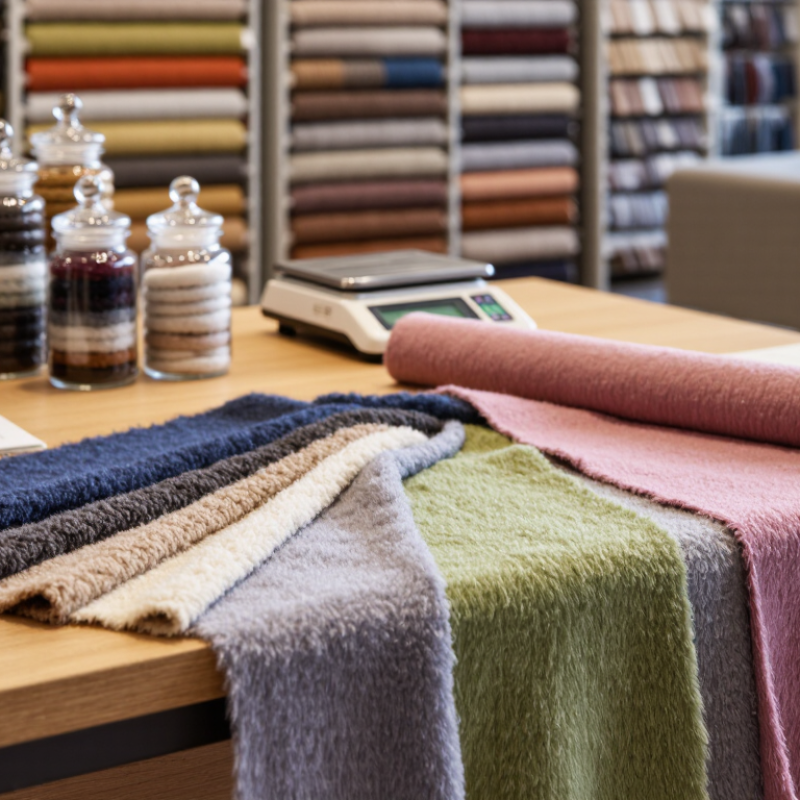
Top 10 Chenille Fabric Suppliers for Global Buyers

Chenille Fabric: Construction, Properties, and Common Applications

Chenille fabric gets its soft, raised surface from chenille yarn. Short lengths of fiber are held between core yarns and twisted, creating a fuzzy pile. The yarn is then woven or knitted into fabric. Its surface can look slightly ridged, with light shifting across the pile as the fabric moves. Soft to the touch.

The construction gives chenille a plush feel and rich color depth, but performance varies with fiber content, pile density, and backing. A loose pile may flatten in frequently used seating or catch on rough surfaces. Some fabrics shed lightly at first; this is worth checking rather than assuming every chenille behaves alike. Ask suppliers for fabric specifications and test samples under realistic conditions, including rubbing, cleaning, and exposure to light.

Chenille is common in upholstery, cushions, throws, curtains, and some apparel. For a sofa, inspect how the pile recovers after pressing and whether seams remain stable. For curtains, consider weight and how the fabric hangs in daylight. Small sample swatches help, though they cannot fully predict wear across a large finished piece. A useful detail, often missed. A buyer should also confirm care instructions and color consistency across production batches.

Key Criteria for Selecting a Chenille Fabric Supplier

A chenille swatch can feel soft and look even, yet behave differently after weeks of use. Ask suppliers for samples from current production, not only showroom pieces. Check pile direction, backing stability, seam slippage, and color consistency under daylight and warm indoor lighting. Details matter. Request test reports for abrasion, pilling, rubbing colorfastness, and dimensional change, with methods and results clearly stated.

Supplier traceability deserves attention, too. Textile Exchange’s Materials Market Report 2024 estimated global fiber production at 124 million tonnes in 2023. That scale makes clear material records useful: ask for fiber composition, dye-lot identification, and documentation linking samples to production batches. For upholstery, compare abrasion results using a recognized method such as ISO 12947. A high cycle count alone is not a complete quality verdict; construction and end use matter.

Confirm minimum order quantities, repeat-order capacity, lead times, and how defects are handled in writing. Ask how suppliers control pile direction and shade variation across rolls. A small trial order can reveal issues that a swatch cannot. It adds time and cost, but skipping it can be the more expensive guess. Even careful checks have limits; test fabric under conditions close to its intended use.

Profiles of Ten Chenille Fabric Suppliers Serving Global Buyers

Profiles of ten chenille fabric suppliers serving global buyers should reveal more than color cards. They should explain yarn construction, pile density, backing options, minimum order quantities, and sample lead times. These details help buyers compare mills with different equipment and production models. A supplier’s ability to repeat a shade across lots matters, especially when upholstery pieces must match. Details matter.

Textile Exchange’s Materials Market Report 2024 estimates that global fiber production reached 124 million tonnes in 2023, with polyester accounting for about 57 percent. This is broad industry context, not chenille-specific data. Still, it makes fiber disclosure worth checking. Each profile should clarify whether chenille yarn uses polyester, cotton, or blends, and whether the supplier provides composition and test documents. Ask for abrasion and colorfastness results relevant to the intended use.

The ten supplier profiles can also compare export experience, quality checks, customization, and communication during sampling. Look for practical evidence: a labeled swatch, a stated pile direction, and clear tolerances for shade variation. Samples can mislead. A small cutting may look uniform while a full production roll shows differences. No profile can replace independent testing or a written specification, and buyers should verify claims before placing large orders.

Top 10 Chenille Fabric Suppliers for Global Buyers — Profiles of Ten Chenille Fabric Suppliers Serving Global Buyers

Buyer’s guide: The profiles below describe sourcing routes and supplier types, not named or ranked companies. Regional capabilities are indicative; confirm that each prospective supplier currently makes the required chenille construction.

Profile Representative Sourcing Base Potential Chenille Offering Typical Supply Model Potential Buyer Fit Key Checks Before Ordering
Profile 1 China’s coastal textile-manufacturing regions Decorative upholstery, curtain, cushion, and other home-furnishing fabrics; confirm chenille yarn and construction availability. Factory-direct production, sampling, and export shipments; minimums and lead times vary by mill. Importers and furniture or home-textile manufacturers seeking a broad range of fabric options. Request construction details, composition, test reports, production capacity, sample approval, and a written delivery schedule.
Profile 2 India’s home-textile and furnishing-textile production clusters Home furnishings and decorative woven fabrics; verify chenille content, pile characteristics, and available finishes. Made-to-order production, with export arrangements dependent on the supplier. Buyers seeking furnishing fabrics, customized designs, or coordinated home-textile ranges. Check colorfastness, dimensional stability, shade consistency, finishing specifications, and export documentation.
Profile 3 Turkey’s established textile-producing regions Interior and furnishing textiles, potentially including chenille upholstery or drapery fabrics. Mill production or sourcing through textile exporters and converters. European, Middle Eastern, and other buyers comparing regional production with overseas sourcing. Confirm the actual manufacturing location, chenille construction, available stock, shipment terms, and testing standards.
Profile 4 Pakistan’s textile and home-textile supply base Woven home-furnishing fabrics; chenille production should be confirmed for the specific mill and product. Factory or export-house supply, with capabilities varying between suppliers. Buyers seeking woven furnishing textiles and willing to evaluate production against a detailed specification. Verify fiber content, pile durability, colorfastness, restricted-substance requirements, and independent inspection options.
Profile 5 Taiwan’s textile and man-made-fiber supply network Technical and decorative textile options; ask whether the supplier offers the required chenille yarn, fabric construction, or both. Specialist manufacturing, yarn or fabric sourcing, and export supply depending on the business. Buyers prioritizing material specification, product development, or consistent repeat orders. Clarify whether chenille yarn is produced in-house or purchased, and request traceability and lot-to-lot quality controls.
Profile 6 South Korea’s textile and synthetic-fiber industry Fabric and fiber-related products; chenille availability and end-use suitability require supplier confirmation. Specialist mill, converter, or export supplier, depending on the product category. Buyers with defined performance requirements or a need to develop a specific fabric specification. Request a technical data sheet, construction breakdown, test methods, production origin, and confirmation of commercial availability.
Profile 7 Italy’s textile and interior-furnishing supply network Decorative interior fabrics and design-led textiles; verify chenille composition, construction, and production origin. Specialist production, conversion, or distribution; order quantities and lead times are supplier-specific. Interior brands, contract projects, and buyers seeking design-focused furnishing materials. Confirm applicable fire-performance requirements, abrasion results, color availability, sampling terms, and repeat-order continuity.
Profile 8 Belgium’s textile and interior-fabric supply network Interior and furnishing textiles; ask suppliers to confirm chenille ranges and intended upholstery or drapery use. Specialist manufacturing, textile conversion, or distribution. European buyers looking for regional sourcing, project support, or access to specialist fabric ranges. Check the supplier’s role in the supply chain, stock status, test documentation, minimum order, and delivery terms.
Profile 9 United States-based fabric converters and distributors Chenille fabrics sourced domestically or internationally for upholstery, drapery, and interior applications. Stock-supported distribution, importing, conversion, or custom sourcing. Buyers who value local communication, smaller replenishment orders, or domestic inventory access. Ask for country of origin, available yardage, replenishment prospects, compliance documents, and claims or returns procedures.
Profile 10 Regional textile wholesalers and sourcing agents serving multiple markets Chenille fabrics sourced from mills in different countries; range and specifications depend on the represented producers. Agent-based sourcing, consolidated orders, or wholesale distribution. Smaller buyers or project teams needing sourcing assistance across several fabric categories. Identify the actual mill, confirm authorization and traceability, review independent test reports, and document who is responsible for quality claims.

Note: These are general sourcing profiles, not verified supplier listings or performance rankings. No supplier-specific prices, capacities, certifications, or delivery promises are asserted. Request current samples and documentation, and independently verify product claims before placing an order.

Comparing Supplier Capabilities, Certifications, and Product Ranges

Choosing among chenille fabric suppliers takes more than comparing catalog photos. Ask how each supplier controls pile height, yarn consistency, and shade variation across production batches. Request physical swatches in the intended color, then inspect them under daylight and warm indoor lighting. Check fabric weight, usable width, backing, and care instructions. Small details matter.

Certifications can help assess quality and responsible production, but their scope varies. Confirm the issuing organization, validity period, and whether the certificate covers the factory, material, or finished fabric. Ask for recent test reports on abrasion resistance, colorfastness, and seam performance when these properties matter for your project. A certificate alone is not a quality guarantee. It is one piece of evidence.

Compare product ranges by construction and intended use, not just by the number of colors offered. Some suppliers may provide upholstery-grade chenille, lighter decorative fabrics, custom colors, or different pile effects. Clarify minimum order quantities, sample fees, production lead times, and how defects are handled. A polished sample may not represent a full production run perfectly; that is worth remembering. Request batch-control details before committing to a large order.

Verifying Suppliers and Managing International Orders

Before placing an order, ask each chenille fabric supplier for a sample cut and a written specification. Check pile height, backing, fiber composition, width, and color under daylight and indoor lighting. Small details matter. A fabric that looks plush in a photo may feel flat after handling, or shift in color between dye lots.

Verify production capacity with specific questions. Request current lead times, minimum order quantities, inspection procedures, and recent test reports relevant to the fabric’s intended use. Compare the sample with the final specification, not just the sales description. I have learned that a neat quotation can still leave one important detail vague: whether the quoted weight applies before or after finishing. Ask for clarification in writing. It may feel repetitive, but it prevents avoidable disputes.

For international orders, confirm packaging, shipping terms, payment milestones, and who arranges transport and insurance. Build time into the schedule for sample approval, production, and transit; port delays can disrupt a carefully planned launch. Keep one signed specification and approved swatch for both parties. Check carton labels and roll quantities before dispatch, and ask how shortages or quality concerns are documented. Even a reliable supplier can make a mistake, and buyers sometimes miss one too. Keep communication direct, dated, and easy to trace.