

Top Fitness Apparel Manufacturers in 2026 for Global Buyers

Choosing a Fitness Apparel Manufacturer in 2026 means checking more than a product catalog. Buyers need evidence of fabric performance, consistent stitching, dependable capacity, and clear communication. Grand View Research estimated the global activewear market at USD 406.1 billion in 2024, with projected growth through 2030. Market estimates are useful context, not proof that any supplier is the right fit. Report definitions and coverage can differ.

Material choices matter, too. Textile Exchange’s Materials Market Report 2024 puts global fiber production at 124 million tonnes in 2023, with polyester accounting for 57%. That scale makes recycled content and traceable sourcing important questions, though claims should be checked against documentation. Numbers alone do not settle the issue.

For global buyers, this guide compares manufacturers through practical details: product specialization, sampling support, quality controls, minimum order quantities, lead times, and communication across time zones. A sample pair of leggings can reveal more than a glossy factory profile: check waistband recovery, seam comfort, opacity, and wash performance. Ask how defects are recorded and corrected. Small details count.

Not every supplier fits every brand. Some figures are estimates; supplier capabilities can also change. Treat this shortlist as a starting point, then verify current certifications, references, and production terms directly before placing an order.
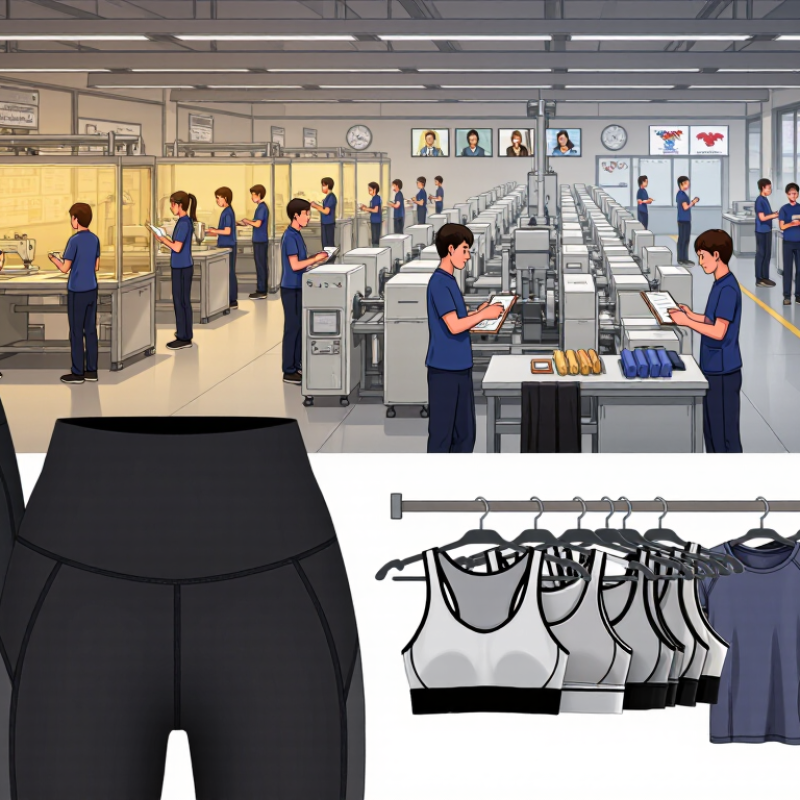
Top Fitness Apparel Manufacturers in 2026 for Global Buyers

Fitness Apparel Manufacturing: Industry Scope and 2026 Market Landscape

Fitness apparel manufacturing in 2026 covers far more than cutting and sewing. Suppliers may handle fabric selection, pattern development, performance testing, garment assembly, and packaging. Common products include leggings, sports bras, training tops, and lightweight outer layers. Buyers increasingly look for moisture management, stretch recovery, durable seams, and consistent sizing. Fit still matters. A fabric that feels smooth on a swatch can behave differently after repeated washing or intense movement.

The market is shaped by demand for versatile clothing, shorter product cycles, and closer attention to material traceability. Manufacturing capacity varies widely: some facilities specialize in small development runs, while others are equipped for larger orders. Neither option is automatically better. Lead times, minimum order quantities, testing records, and quality-control procedures all affect the final result. Forecasts can miss sudden shifts in demand, and sustainability claims may be difficult to compare without clear documentation. Ask specific questions, and verify the answers with samples and records.

Tips: Request a size set and wash-test samples before confirming bulk production. Check seam strength, opacity, stretch recovery, and measurements across sizes. Agree on inspection standards in writing. Leave room in the schedule for revisions; they often take longer than expected.

How to Evaluate Fitness Apparel Manufacturers for Global Sourcing

When comparing fitness apparel manufacturers, assess repeatable performance, not just a polished sample. Define fabric weight, stretch and recovery, opacity, seam strength, and colorfastness after washing. Textile Exchange’s Materials Market Report 2024 estimates global fiber production reached 124 million tonnes in 2023. That scale makes clear fiber specifications and traceability essential. Ask suppliers to identify fiber content, fabric mills, dyeing sites, and any subcontracted processes. Samples can mislead. Test leggings for squat opacity and seam durability; test tops for sweat-related color change and shape retention.

Check factory capacity against your forecast, then confirm minimum order quantities, production lead times, and inspection steps in writing. Request recent test reports, but verify that the tested fabric matches the bulk order. The Ellen MacArthur Foundation’s A New Textiles Economy report found that less than 1% of material used to produce clothing was recycled into new clothing. For buyers evaluating recycled-content claims, request transaction records and material documentation rather than relying on labels alone. Small details matter. A factory may meet your price and delivery targets yet struggle with consistent sizing across production lots; review measurements from randomly selected finished garments before approving shipment.

Top Fitness Apparel Manufacturers in 2026: Global Sourcing Evaluation

Suggested weighting for comparing fitness apparel suppliers

This 100-point scorecard is a practical buyer-defined framework, not a published industry benchmark. Assess product quality, compliance documentation, and production capacity using verifiable evidence such as sample inspections, audit records, and production plans.

Leading Fitness Apparel Manufacturers by Region and Specialization

Regional specialization is a useful starting point, not a factory guarantee. East Asian suppliers often offer integrated fabric, trim, and garment production, including seamless knits and technical stretchwear. Vietnam and Indonesia are worth assessing for cut-and-sew performance tops and leggings. Bangladesh and India have broad capacity for high-volume basics and cotton blends. Türkiye and Portugal may suit buyers seeking closer European coordination, though costs and minimum orders vary.

Market growth adds pressure to choose carefully. Grand View Research estimated the global sports apparel market at USD 203.3 billion in 2023 and forecast 6.7% annual growth from 2024 to 2030. That measures demand, not manufacturing quality. Textile Exchange’s Materials Market Report 2024 estimated polyester made up 57% of global fiber production in 2023. Buyers should still check fabric recovery, pilling, colorfastness, and performance after repeated washing. Ask for test records.

A map can mislead. A supplier’s country does not reveal where its fabric is knitted or dyed, so verify the production route. Request samples in the intended fabric weight, inspect flatlock seams, and confirm capacity against realistic delivery windows. Smaller trial orders can expose problems before scale-up, although they may cost more per unit. Regional expertise helps; documented quality control matters more.

Materials, Production Capabilities, and Compliance Standards

Choosing a fitness-apparel manufacturer in 2026 means checking fabric performance and factory records, not just the sample feel. Textile Exchange’s Materials Market Report 2024 estimates global fiber production reached 124 million tonnes in 2023, with polyester accounting for 57%. That scale makes fiber-origin and recycled-content claims worth verifying through invoices and chain-of-custody records. Request test results for stretch recovery, colorfastness, and pilling on the exact fabric lot. A soft swatch can still fail after repeated washing.

Production capability should be proven in a pilot run. Check line capacity by style, defect rates, and consistency across sizes. UNEP’s 2023 report, Sustainability and Circularity in the Textile Value Chain, estimates the textile value chain contributes roughly 2–8% of global greenhouse-gas emissions. Ask for facility-level energy and water records, plus traceability for trims and subcontracted work. Numbers matter. A polished audit file does not guarantee stable seasonal output.

Compliance checks should cover current destination-market chemical restrictions, labeling rules, and labor requirements. Match third-party test reports to the product, production site, and shipment date; verify certificate scope and expiry. Still, gaps happen. An audit may miss a temporary subcontractor or a process change. Ask how corrective actions are tracked and closed, then compare the evidence with what workers and production records show.

How Global Buyers Select and Manage Manufacturing Partners

For global buyers, choosing a fitness apparel manufacturer starts with the product, not the quotation. Define fabric weight, stretch recovery, seam construction, size range, and expected order volume before comparing prices. Specifics matter. Ask for recent production records, sample timelines, and quality checks for similar garments. An attractive sample proves little if bulk fabric behaves differently after washing, so test samples for fit, color retention, and repeated stretch.

Evaluate more than the factory’s stated capacity. Review how it handles material sourcing, production scheduling, defect reporting, and changes to specifications. Request a clear breakdown of minimum order quantities, payment milestones, lead times, and shipping responsibilities. A spreadsheet can help compare offers, but it cannot reveal every communication problem. Notice how quickly questions receive useful answers.

After placing an order, keep one approved sample and written specifications as shared references. Agree on inspection points, such as fabric checks before cutting and measurements during sewing. Short check-ins can surface delays while there is still time to adjust. Keep notes on decisions and corrective actions. Even a careful process can miss something; buyers should review recurring defects rather than assume one successful shipment guarantees the next.

Top Fitness Apparel Manufacturers in 2026 for Global Buyers - How Global Buyers Select and Manage Manufacturing Partners

Partner evaluation framework for comparing manufacturers without relying on brand rankings. The suggested weights are a customizable procurement guide, not independently verified industry averages.

Evaluation dimension Suggested weight What to assess Evidence to request Practical buyer check
Product and technical capability 20% Experience with the relevant product types, construction methods, stretch fabrics, seams, trims, and fit requirements. Relevant product samples, technical specifications, and documented development workflow. Compare a sample against the approved tech pack, measurement chart, and construction details.
Quality management 20% Inspection procedures, defect classification, corrective-action handling, and consistency between samples and bulk production. Quality manual or inspection plan, sample inspection records, and corrective-action examples with sensitive details removed. Agree on measurable acceptance criteria and inspection points before placing a production order.
Material traceability and compliance 15% Ability to identify material sources and provide documentation relevant to the destination market and product claims. Material declarations, transaction or chain-of-custody records where applicable, and valid test or certification documents. Verify document scope, issuing body, validity dates, and whether the evidence covers the specific material and facility.
Capacity and production planning 15% Available capacity, order scheduling, production bottlenecks, and the ability to manage repeat orders and seasonal demand. A production calendar, capacity assumptions, and a written explanation of key dependencies such as fabric or trim availability. Confirm the schedule for each stage, including material approval, sampling, bulk production, inspection, and shipment readiness.
Cost transparency and commercial terms 10% Clarity on quoted scope, minimum order quantities, sampling charges, payment milestones, and potential cost changes. Itemized quotation, written assumptions, and terms for changes, cancellations, and reorders. Compare quotes on the same specification, quantity, packaging, delivery basis, and testing scope.
Communication and product development 10% Clarity of technical communication, ownership of open questions, sample revision control, and escalation procedures. Named project contacts, sample comments log, revision history, and a regular status-report format. Run a small development project and track response quality, issue resolution, and adherence to agreed milestones.
Responsible sourcing and workplace practices 5% Policies and controls addressing worker safety, working conditions, subcontracting, and remediation of identified issues. Facility information, relevant audit reports or assessment summaries, and documented corrective-action follow-up. Confirm the audited site is the actual production site and clarify how subcontractors are disclosed and controlled.
Logistics and delivery coordination 5% Export documentation readiness, packing requirements, shipment coordination, and communication of delivery risks. Example shipping documents with confidential information removed and a documented dispatch process. Specify the delivery term, named destination, packaging requirements, and responsibility for export documentation in writing.
Total suggested evaluation weight: 100% Score each dimension using the same evidence standard. Adjust the weights to reflect product risk, target market, order size, and sourcing priorities.