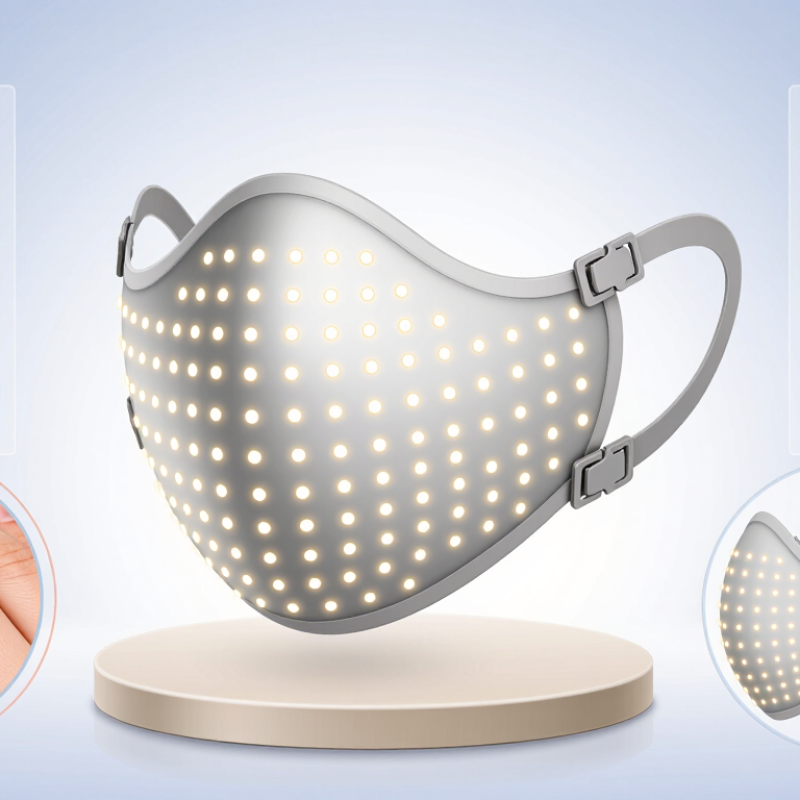
Why Choose LED Silicone Face Masks for Global Sourcing?
Global buyers are examining the Led Silicone Face Mask beyond its appearance. They want reliable performance, comfortable materials, and consistent production. A soft silicone body should sit evenly across the face. It should not feel stiff after several minutes. Small details matter, including strap adjustment, LED coverage, charging stability, and cleaning instructions.
Dr. Dennis Gross, a dermatologist and skincare technology specialist, describes LED therapy as “a safe, non-invasive way to treat the skin.” This perspective helps explain the product’s growing appeal. However, a quotation cannot replace product evidence. Buyers still need documented light wavelengths, output measurements, battery information, and skin-contact material specifications. Supplier audits also matter. So do sample tests.
Consistency is the real sourcing challenge.
A promising sample may not represent every production batch. Color can vary slightly. Silicone softness can change. Packaging may arrive with unclear translations or missing care details. These issues are not dramatic, but they can damage customer trust. Responsible buyers should request test reports, quality-control records, and traceable production information. They should also confirm applicable market requirements before placing large orders.
The best Led Silicone Face Mask supplier is not always the cheapest. A stronger partner communicates clearly, corrects defects, and shares realistic lead times. That honesty is valuable. No supplier is perfect. The sourcing process is partly about discovering weaknesses early, then deciding whether the supplier can improve.
LED silicone face masks are wearable cosmetic devices designed to deliver controlled light across the face. They combine flexible silicone with embedded light-emitting diodes. The material bends around the cheeks, nose, and forehead. A useful design should feel soft, but not loose. Fit matters. Core features include light settings, timed sessions, rechargeable power, and washable surfaces. Clear instructions should state intended use, session length, and eye-safety precautions. These details support responsible use without overstating skincare results.
For global sourcing, buyers should request wavelength data, irradiance reports, battery specifications, and test documentation. Supplier samples deserve inspection under real conditions. Check whether LEDs remain evenly lit after repeated bending. Examine seams, charging ports, straps, and cleaning instructions. A polished mask may still create uncomfortable pressure points. That detail is easy to miss. Materials should be traceable, and electrical products must meet applicable destination-market requirements. Packaging should protect the mask from heat, moisture, and crushed corners during transport. The softest silicone is not always the most durable. Ask for independent evidence, not promises.
LED silicone face masks combine flexible medical-grade silicone with light-emitting diodes positioned close to the skin. The chart shows representative wavelengths commonly used in LED phototherapy: blue light around 415 nm, red light around 630 nm, and near-infrared light around 830 nm. Actual device specifications and treatment outcomes vary by product, irradiance, dose, and usage protocol.
LED light therapy uses controlled photons, not heat, to support skin-focused photobiomodulation. Red light, commonly around 630–660 nm, may support visible skin renewal. Near-infrared wavelengths, often 830–850 nm, can reach deeper tissue. Research links this process to mitochondrial activity and cellular energy production. However, results depend on wavelength, irradiance, treatment time, and regular use.
Silicone influences delivery. Its flexibility helps the mask follow the cheeks, nose, and jawline. Better contact can reduce uneven gaps and improve light exposure. It does not create the therapy itself. The LEDs and optical layout do that work. A 2024 Grand View Research report estimated the global LED light therapy market at over USD 1 billion in 2023. This growth reflects demand, but market size does not prove clinical effectiveness. That distinction matters during global sourcing.
Tips: Request wavelength, irradiance, dose, eye-safety, and electrical-testing documents. Check whether the silicone is skin-safe and remains stable after repeated cleaning. Measure light across the mask, not only at its center. Small gaps can change exposure. The design is not flawless. Some masks feel heavy around the nose, while others lose contact near the chin. A practical fit test with different face shapes can reveal more than attractive product images. Third-party testing and clear instructions support safer purchasing decisions. (Sources: Grand View Research, 2024; Photodermatology, Photoimmunology & Photomedicine, systematic review literature.)
Why Choose LED Silicone Face Masks for Global Sourcing?
Key Benefits of LED Silicone Face Masks for Global Buyers
For global buyers, silicone LED face masks offer comfort, flexibility, and easier product handling. The soft material can follow facial contours better than rigid plastic. It also feels lighter during short beauty routines. Buyers should confirm silicone grade, skin-contact testing, LED wavelength accuracy, and heat control. These details affect user comfort and product reliability. A polished sample is not enough. I have seen attractive samples fail after repeated charging tests. Request batch records, inspection reports, and clear warranty terms before placing a larger order.
Supplier communication matters just as much as product design. Ask for measured battery capacity, charging time, LED output data, and replacement-part availability. Packaging should protect the mask, controller, and charging cable during long-distance transport. Instructions need clear language and realistic usage guidance. Avoid medical promises unless qualified evidence and local approvals support them. Requirements can vary between markets, so buyers should review applicable consumer-product, electrical, labeling, and cosmetic-device rules with local experts. This step may slow purchasing, but it reduces expensive surprises.
Tips: Order samples from more than one supplier. Compare flexibility, strap strength, charging stability, and cleaning instructions. Keep one tested sample as a reference during production inspections. Recheck critical features, because factory changes can happen quietly. The best sourcing decision is not always the cheapest quote. It is the option with consistent quality, documented testing, and responsive technical support.
For international buyers, product quality begins with controlled materials and repeatable production. Medical-grade or skin-safe silicone should have clear composition records and supplier declarations. Ask for batch samples, not only polished showroom units. A soft mask must also keep its shape around the nose, cheeks, and jaw. Poor flexibility can create pressure points during a twenty-minute session. Small details matter.
LED performance requires more than attractive light output. Suppliers should provide test reports for wavelength accuracy, intensity, heat control, and electrical safety. Photobiological safety testing, such as IEC 62471 evaluation, can help assess optical risks. Skin-contact materials may require biological safety evidence, including relevant ISO 10993 testing. RoHS and REACH documentation can support restricted-substance compliance in applicable markets. Requirements still vary by destination.
Safety depends on the whole system. Check charging protection, cable durability, battery documentation, and electromagnetic compatibility. Review warning labels, instructions, cleaning guidance, and user age limitations before approval. Traceable serial numbers and corrective-action records strengthen supplier accountability. A factory audit should compare actual production with submitted samples. It is not always perfect. Testing may miss failures caused by repeated bending, sweat, or careless charging. Independent verification remains valuable, especially when supplier documents look unusually general. Clear records build trust between manufacturers, importers, and users.
Choosing LED silicone face masks for global sourcing requires more than comparing unit prices. Grand View Research estimates the global LED light therapy market reached about USD 1.1 billion in 2023, with projected growth through 2030. That growth attracts new factories, but not every supplier controls optical consistency. Request recent test reports for wavelength accuracy, irradiance, heat management, and silicone skin-contact safety. IEC 62471 testing can help assess photobiological risks. ISO 9001 certification is useful, but it does not replace factory verification.
Ask suppliers to separate tooling, silicone, LEDs, batteries, packaging, inspection, freight, and warranty reserves. A low quotation may exclude molds or replacement parts. Confirm minimum order quantities and payment stages in writing. Request three pilot samples from different production batches. Check charging time, strap strength, controller response, and whether light output changes after repeated use. Small details become expensive defects.
Supply chain reliability deserves its own scorecard. The World Bank’s 2023 Logistics Performance Index evaluates customs, infrastructure, shipment availability, logistics competence, tracking, and timeliness. Use these categories when comparing production locations and freight partners. Require a documented bill of materials, change-control process, and backup component sources. For lithium-powered models, verify applicable transport documentation and battery testing before shipment. A spreadsheet can still lie. Forecasts may be wrong, especially during seasonal demand. Build safety stock around verified lead times, not promises, and review supplier performance after every production cycle.
| Evaluation Category | Data Dimension | Typical Market Benchmark | What to Verify with Suppliers | Commercial Impact | Priority |
|---|---|---|---|---|---|
| Product Performance | Common LED wavelengths | Red light commonly falls around 620–660 nm; near-infrared light commonly falls around 810–850 nm. | Request an independent optical test report showing wavelength tolerance, irradiance, treatment area, and measurement method. | Accurate wavelength and irradiance data support consistent product positioning and reduce performance disputes. | Critical |
| Product Performance | Irradiance and dose | Consumer LED phototherapy devices often specify irradiance in mW/cm² and an exposure time in minutes; dose is calculated as irradiance × time. | Confirm that the reported irradiance is measured at the skin-facing surface, not only at the LED component. | Higher irradiance can shorten treatment time, but excessive output may increase safety, heat, and regulatory requirements. | Critical |
| Product Design | Silicone material | Medical-grade or skin-contact silicone is generally preferred for flexible masks because it is soft, washable, and resistant to repeated bending. | Check material declarations, skin-contact test results, odor after aging, Shore hardness, tear strength, and cleaning instructions. | Material quality affects comfort, return rates, odor complaints, and product life. | Critical |
| Safety & Compliance | Photobiological safety | IEC 62471 is a recognized framework for evaluating the photobiological safety of lamps and LED systems. | Request a laboratory report covering blue-light hazard, ultraviolet emission, infrared exposure, and risk-group classification where applicable. | Safety documentation helps reduce market-entry delays and retailer compliance risks. | Critical |
| Safety & Compliance | Electrical and battery safety | USB-powered products commonly use low-voltage direct current; rechargeable versions require battery, charger, and transport documentation. | Verify electrical safety testing, overcharge protection, short-circuit protection, battery test summaries, and shipping classification. | Battery compliance can materially affect freight options, documentation workload, and fulfillment cost. | Critical |
| Safety & Compliance | Restricted substances | RoHS and REACH-related declarations are commonly requested for products entering major international markets. | Request a bill of materials, supplier declarations, and risk-based laboratory screening for plastics, cables, coatings, and electronics. | Incomplete chemical documentation can cause customs, marketplace, or retailer delays. | High |
| Supplier Evaluation | Production capability | A capable supplier should demonstrate control of silicone molding, LED assembly, firmware or timer functions, final assembly, and packaging. | Review process flow, equipment list, workforce capacity, subcontracting policy, and recent production records. | Vertical control generally improves consistency and reduces coordination risk. | High |
| Supplier Evaluation | Minimum order quantity | Indicative private-label MOQs may range from approximately 100–500 units for standard models and 500–2,000 units for significant customization. | Clarify whether MOQ applies per color, mold, packaging design, firmware version, or total purchase order. | Lower MOQs reduce inventory exposure but may increase unit cost and setup fees. | High |
| Cost Analysis | Indicative product cost | For silicone LED masks with controller and basic packaging, an indicative factory-level range is approximately US$25–70 per unit, depending on specifications and volume. | Compare quotations using the same LED count, wavelength, irradiance, controller, battery, packaging, testing, and Incoterm. | The lowest unit price may exclude testing, tooling, packaging development, or quality inspection fees. | Critical |
| Cost Analysis | Tooling and development fees | Custom silicone molds, electronics, packaging, and firmware may create one-time engineering charges ranging from hundreds to several thousand US dollars. | Confirm mold ownership, revision fees, maintenance responsibility, sampling charges, and refund conditions linked to production volume. | Amortizing one-time costs across a small order can significantly increase landed unit cost. | High |
| Cost Analysis | Landed-cost structure | Landed cost includes product price, packaging, inspection, freight, insurance, customs duties, taxes, brokerage, and local delivery. | Request an itemized quotation under a clearly stated Incoterm such as EXW, FOB, CIF, or DDP. | Comparing only the factory price can understate the final cost by a material amount. | Critical |
| Supply Chain | Production lead time | Standard replenishment commonly requires approximately 20–45 calendar days after deposit and artwork approval; custom development may require additional weeks. | Separate sample lead time, tooling lead time, mass-production lead time, inspection time, and export documentation time. | Clear milestones improve launch planning and reduce stock-out risk. | High |
| Supply Chain | Freight planning | Air freight is faster but generally more expensive; ocean freight is slower but typically more economical for larger shipments. | Obtain carton dimensions, gross weight, battery status, cartons per pallet, shipping point, and estimated transit time. | Accurate packing data is necessary for reliable freight and warehouse budgeting. | High |
| Quality Management | Pre-shipment inspection | AQL-based inspections commonly check appearance, function, dimensions, labeling, packaging, accessories, and quantity before shipment. | Define acceptable quality limits, defect classifications, inspection sample size, and corrective-action procedures in the purchase agreement. | Inspection reduces the probability of receiving nonconforming units and supports payment control. | Critical |
| Quality Management | Functional consistency | Every unit should be checked for LED operation, timer accuracy, controller response, charging behavior, cable integrity, and visible silicone defects. | Require a signed test checklist and retain golden samples for comparison during production. | Functional consistency is especially important for reducing warranty claims and customer returns. | Critical |
| Supply Chain Reliability | Component continuity | LEDs, batteries, charging components, controllers, and silicone materials can be affected by allocation, redesigns, or discontinuation. | Ask for approved component lists, second-source options, notification periods, and change-control procedures. | Component continuity protects future replenishment and prevents unapproved specification changes. | High |
| Supply Chain Reliability | Capacity and backup planning | Reliable suppliers should have documented capacity planning and contingency procedures for equipment failure, labor disruption, and material shortages. | Request monthly capacity estimates, backup production arrangements, critical-material safety stock, and recovery-time targets. | Contingency planning reduces the impact of unexpected production interruptions. | High |
| Commercial Terms | Payment and warranty terms | International transactions often use a deposit before production and a balance before shipment; warranty periods vary by product configuration and market. | Specify payment milestones, warranty duration, DOA policy, replacement-credit rules, spare-parts support, and response times. | Balanced terms protect working capital while creating accountability for quality issues. | High |
| Market Readiness | Claims and labeling | Cosmetic, wellness, and medical claims can trigger different regulatory expectations depending on the destination market and wording used. | Review instructions, contraindications, user warnings, output specifications, importer information, and product claims before mass printing. | Correct claims and labeling reduce the risk of relabeling, listing removal, or regulatory enforcement. | Critical |
| Sustainability | Packaging and serviceability | Compact packaging, replaceable cables, repairable controllers, and recyclable materials can reduce waste and after-sales cost. | Measure packaging volume, request material composition, assess accessory replaceability, and confirm battery disposal guidance. | Efficient packaging lowers freight emissions and storage cost while improving long-term support. | Medium |